How to Attach Casters to Metal Legs: The Ultimate Step-by-Step Guide
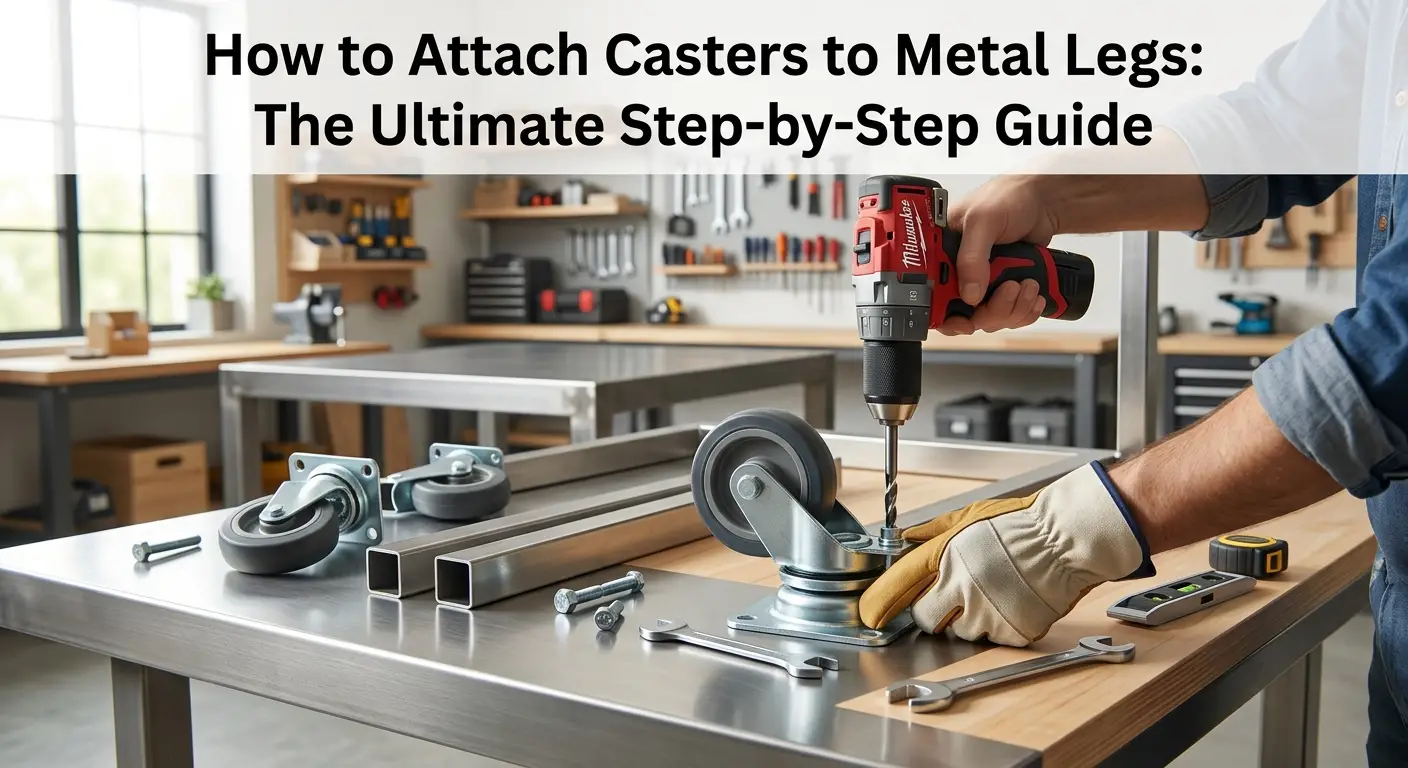
Adding wheels to furniture, tables, workbenches, or industrial structures can transform the way you move and work with them. If you’ve ever wondered the best way to Attach Casters to Metal Legs, this post breaks everything down in the simplest, most practical way possible. Whether you’re upgrading a workshop cart or giving mobility to a heavy metal frame, this post walks you through the process safely and efficiently.
Understanding Casters and Their Importance
Casters are small wheel assemblies that attach to the bottom of furniture or equipment. They help improve movement, reduce strain, and boost productivity, especially in industrial and workshop environments.
Types of Casters
- Swivel casters – rotate 360°, perfect for maneuverability
- Rigid casters – roll straight, ideal for stability
- Locking casters – include brakes to keep equipment in place
Common Uses
- Industrial carts
- Workbenches
- Tool stands
- Metal-frame workstations
- Storage racks
Benefits of Adding Casters to Furniture or Equipment
Adding high-quality casters provides several advantages:
- Improved mobility: Move heavy equipment effortlessly
- Better ergonomics: Reduce the need for lifting and pushing
- Reduced wear and tear: Protect floors with smooth-rolling wheels
- Increased flexibility: Reconfigure your workspace anytime
Tools & Materials Needed to Attach Casters to Metal Legs
Before you start installing casters, gather the following tools:
- Power drill with metal drill bits
- Measuring tape
- Marker or punch tool
- Wrench set
- Mounting bolts or screws
- Optional: metal plates for reinforcement
- Caster wheels (We recommend Flexpipe)
Safety Precautions Before Starting
Metal work requires caution. Remember to:
- Wear safety glasses and gloves
- Secure the metal structure before drilling
- Work in a clean, well-lit area
- Confirm your casters can support the required load
How to Attach Casters to Metal Legs (Step-by-Step Guide)
This section covers the complete process to Attach Casters to Metal Legs, ensuring your installation is strong, safe, and long-lasting.
Measuring and Marking the Mounting Area
Start by flipping your metal structure upside down. Measure and mark the exact spot where each caster will go.
Make sure:
- All casters are aligned
- Positions match on each leg
- You use a punch tool for drilling accuracy
Alignment is key; small mistakes can cause wobbling or uneven rolling.
Drilling Holes in Metal Legs Correctly
Drilling into metal demands precision:
- Use a sharp metal drill bit
- Start at low speed to create a starter hole
- Increase speed gradually
- Apply steady pressure, but avoid forcing the drill
If your metal legs are thin, you may want to add a small metal plate to increase thickness for stronger mounting.
Mounting Your Casters Securely
Once your holes are drilled:
- Insert bolts through the caster mounting plate
- Tighten nuts with a wrench
- Double-check that every caster sits flush against the metal leg
- If using swivel casters, check rotation clearance
Snug bolts prevent shaking and extend the caster’s lifespan.
Testing Stability and Load Capacity
Before flipping the structure upright:
- Press down firmly on each caster
- Check wheel spin and swiveling
- Confirm brakes (if included) engage properly
- Slowly flip the structure upright and test mobility
If everything rolls smoothly and stays balanced, your installation is successful.
Choosing the Best Casters for Metal Legs
Selecting the right casters is just as important as installing them correctly.
Consider:
- Load rating per wheel
- Floor surface
- Wheel size
- Swivel or rigid movement
- Brake requirements
Why Flexpipe’s Caster Wheels Stand Out
If you’re installing casters on metal legs, Flexpipe’s Caster Wheels are an exceptional choice. The caster lineup includes:
- High load capacities
- Industrial-grade durability
- Ultra-smooth rolling performance
- Corrosion-resistant design
- Reliable locking mechanisms
Flexpipe also offers multiple mounting styles and wheel sizes, making them perfect for metal frames, assembly tables, flow racks, and custom carts.
Common Mistakes to Avoid When Attaching Casters
Avoid the following issues to ensure long-lasting performance:
- Using undersized casters for heavy loads
- Misalignment during installation
- Over-tightening bolts and cracking the mounting plate
- Forgetting to reinforce thin metal legs
- Choosing the wrong wheel material for the floor type
Maintenance Tips to Extend Caster Lifespan
Keep your casters in great shape with regular care:
- Lubricate bearings every few months
- Clean debris from wheel treads
- Tighten mounting bolts periodically
- Inspect brakes and swivels for wear
- Replace worn wheels before they damage floors
Proper maintenance keeps your equipment moving smoothly for years.
Conclusion
Installing casters is one of the easiest ways to improve mobility, efficiency, and ergonomics in your workspace. By following this guide on How to Attach Casters to Metal Legs, you can confidently upgrade your equipment with stable, long-lasting wheels. And if you want the best combination of durability and smooth performance, Flexpipe’s Caster Wheels are a standout choice.
FAQs
- Can you attach casters to any type of metal leg?
Yes, as long as the metal is thick enough to hold mounting bolts. Thin metal may require reinforcement plates.
- What’s the best type of caster for heavy metal tables?
Heavy-duty swivel casters with brakes, Flexpipe offers excellent industrial options.
- Do you need to drill holes, or can you weld casters on?
Drilling and bolting are safer and easier. Welding is optional but only recommended for professionals.
- How much weight can casters support?
It depends on the caster rating. A typical heavy-duty caster supports 150–300 lbs, but Flexpipe casters can handle even more.
- Can casters damage floors?
Rubber or polyurethane wheels protect floors. Avoid metal wheels on finished surfaces.
- How do you keep casters from rolling too much?
Choose casters with foot brakes or locking mechanisms.
- Should you use all swivel casters or mixed types?
A mix of 2 rigid + 2 swivel offers the best control for long equipment.
Recent Articles