
Stainless Steel vs. Coated Steel Pipe: Powerful Differences That Matter for Industrial Storage
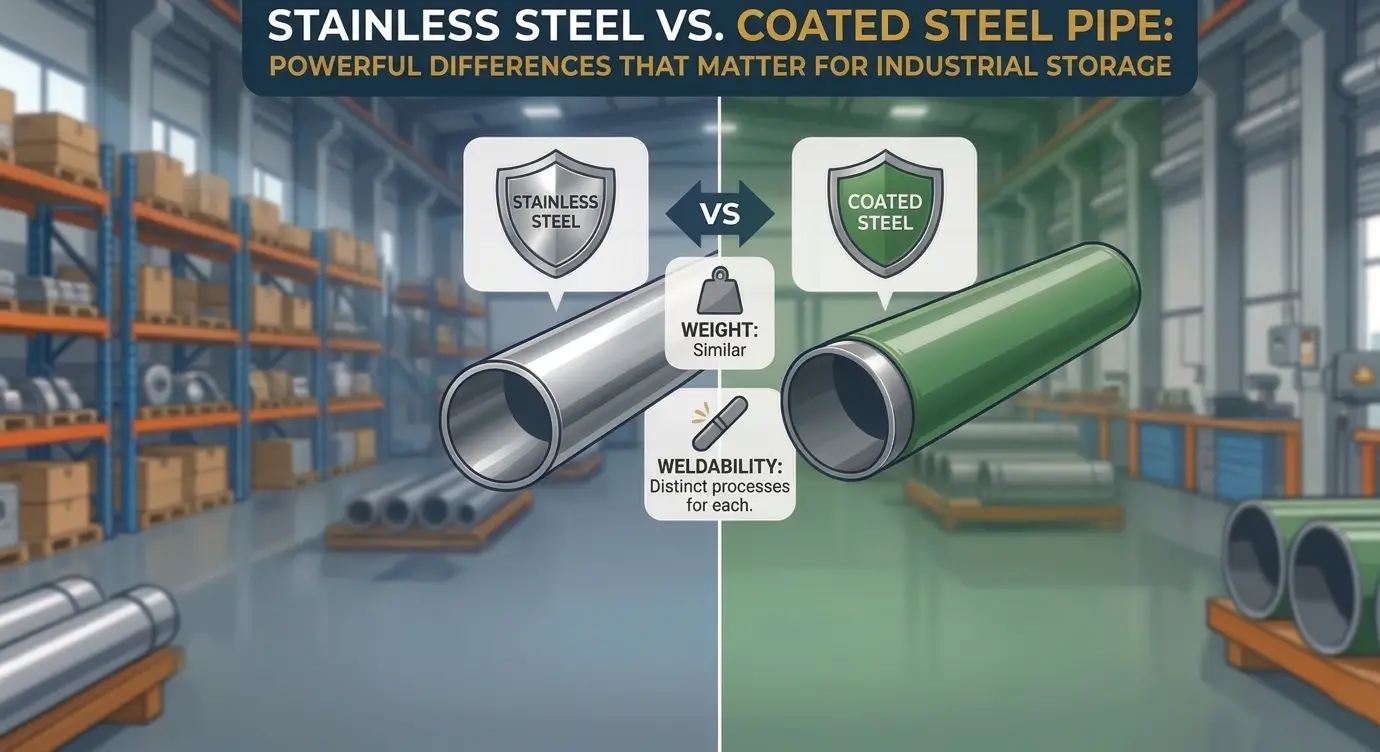
When it comes to industrial piping, construction projects, and manufacturing facilities, the debate around Stainless Steel vs. Coated Steel Pipe is more relevant than ever. Choosing the right pipe material can directly affect durability, safety, maintenance costs, and long-term performance.
Both stainless steel and coated steel pipes are widely used across industries such as oil and gas, water treatment, automotive manufacturing, and warehousing. However, their differences go beyond surface appearance. Factors like corrosion resistance, strength, cost, and storage requirements play a major role in deciding which option works best.
Equally important, but often overlooked, is how these pipes are stored and handled. Poor storage can damage coatings, cause corrosion, or create safety risks. This is where Flexpipe’s Pipe Racking Systems become a critical part of the conversation.
In this post, we’ll break down everything you need to know about Stainless Steel vs. Coated Steel Pipe, while also showing how smart pipe racking solutions can protect your investment and improve warehouse efficiency.
What Are Stainless Steel Pipes?
Stainless steel pipes are manufactured from steel alloys containing chromium, which forms a passive layer on the surface. This layer protects the pipe from rust and corrosion, even in harsh environments.
Key Characteristics of Stainless Steel Pipe
- Naturally corrosion-resistant
- High strength-to-weight ratio
- Smooth surface finish
- Long service life
- Minimal maintenance requirements
Stainless steel pipes are commonly used in food processing, pharmaceuticals, chemical plants, and applications where hygiene and corrosion resistance are critical.
Advantages of Stainless Steel Pipe
- Excellent resistance to moisture and chemicals
- No need for additional coatings
- Maintains structural integrity over time
- Ideal for high-temperature and high-pressure applications
Limitations of Stainless Steel Pipe
- Higher upfront cost
- Heavier than some coated alternatives
- Requires proper storage to prevent surface damage
What Are Coated Steel Pipes?
Coated steel pipes are carbon steel pipes that are treated with protective coatings such as epoxy, galvanized zinc, or polymer layers. These coatings act as a barrier against corrosion and environmental damage.
Common Types of Coatings
- Galvanized (zinc-coated)
- Epoxy-coated
- Polyethylene or polymer-coated
Advantages of Coated Steel Pipe
- More affordable than stainless steel
- Customizable coatings for specific environments
- Strong mechanical performance
- Widely available in various sizes
Limitations of Coated Steel Pipe
- Coatings can chip or wear over time
- Higher maintenance requirements
- Corrosion risk if the coating is damaged
- Requires careful handling and storage
Stainless Steel vs. Coated Steel Pipe: Material Comparison Table
| Feature | Stainless Steel Pipes | Coated Steel Pipes |
| Corrosion Resistance | Excellent | Good (depends on coating) |
| Initial Cost | High | Moderate |
| Maintenance | Low | Medium to High |
| Durability | Very High | High (if coating intact) |
| Weight | Heavy | Slightly lighter |
| Storage Sensitivity | Moderate | High |
This comparison highlights why Stainless Steel vs. Coated Steel Pipe is not just a material choice, but an operational one.
Cost Considerations in Stainless Steel vs. Coated Steel Pipe
Cost is often the deciding factor. Stainless steel pipes typically have a higher initial price, but their low maintenance and long lifespan can offset the investment over time.
Coated steel pipes are more budget-friendly upfront, making them attractive for large-scale projects. However, damaged coatings, corrosion repairs, and replacements can increase total lifecycle costs.
Smart storage systems, like those from Flexpipe, help reduce hidden costs by protecting pipes from damage during storage and handling.
Corrosion Resistance and Environmental Performance
When evaluating Stainless Steel vs. Coated Steel Pipe, corrosion resistance is a top concern.
- Stainless steel resists rust naturally, even in humid or chemical-heavy environments.
- Coated steel relies entirely on the integrity of its coating. Once compromised, corrosion can spread quickly.
Proper storage, keeping pipes off the floor, spaced correctly, and protected from impact, is essential. This is where Flexpipe’s Pipe Racking Systems offer a major advantage.
The Importance of Proper Pipe Storage
No matter which pipe type you choose, improper storage can lead to:
- Scratched stainless steel surfaces
- Chipped or cracked coatings
- Corrosion from moisture exposure
- Workplace safety hazards
Traditional storage methods like stacking pipes on the floor or using wooden racks often fall short in modern facilities.
How Flexpipe’s Pipe Racking Systems Solve Storage Challenges
Flexpipe Pipe Racking Systems are engineered to provide a flexible, modular, and durable solution for storing both stainless steel and coated steel pipes.
Key Benefits of Flexpipe Pipe Racking Systems
- Modular design that adapts to different pipe diameters
- Prevents pipe-to-pipe contact and coating damage
- Keeps pipes elevated and organized
- Improves worker safety and accessibility
- Easy to reconfigure as inventory changes
Whether you’re storing high-value stainless steel pipes or coated steel pipes that require extra protection, Flexpipe systems help maintain material integrity.
Safety and Efficiency in Warehouse Operations
Efficient storage directly impacts workflow. With Flexpipe’s Pipe Racking Systems, facilities can:
- Reduce handling time
- Minimize lifting injuries
- Improve inventory visibility
- Maximize floor space
When comparing Stainless Steel vs. Coated Steel Pipe, it’s clear that both benefit from structured, impact-free storage.
Sustainability and Long-Term Value
Sustainability is another key factor. Stainless steel is highly recyclable, while coated steel’s recyclability depends on the coating materials.
By extending pipe lifespan and reducing waste, Flexpipe’s Pipe Racking Systems support sustainable manufacturing practices and long-term value creation.
Conclusion
The decision between Stainless Steel vs. Coated Steel Pipe comes down to performance needs, budget, and environmental conditions. However, regardless of your choice, proper storage is non-negotiable.
By investing in Flexpipe’s Pipe Racking Systems, businesses can protect pipe quality, improve safety, and enhance operational efficiency. It’s not just about choosing the right pipe; it’s about managing it the right way.
FAQs
- Which is better: stainless steel or coated steel pipes?
It depends on the application. Stainless steel offers superior corrosion resistance, while coated steel provides cost savings for less aggressive environments.
- Are coated steel pipes durable?
Yes, but only if the coating remains intact. Proper storage is critical.
- Do stainless steel pipes need special storage?
They should be stored to prevent scratches and contamination, ideally on dedicated racking systems.
- Can one racking system store both pipe types?
Yes. Flexpipe’s Pipe Racking Systems are modular and suitable for both stainless steel and coated steel pipes.
- How do pipe racks improve safety?
They prevent rolling, falling, and improper stacking, reducing workplace accidents.
- Are Flexpipe systems customizable?
Absolutely. They are designed to adapt to changing inventory and space requirements.
Recent Articles