
Types of Flow Rack System: A Complete Guide for Efficient Material Handling

In today’s competitive market, companies are under constant pressure to improve efficiency, reduce waste, and optimize storage space. One of the most effective ways to achieve these goals is through flow rack systems. These racks streamline material handling, support lean manufacturing practices, and improve productivity on the shop floor.
But did you know that there are different types of flow rack systems, each designed for specific needs?
In this post, we’ll break down the major types, their benefits, and why Flexpipe’s Flow Rack System is the ultimate choice for modern industries.
What is a Flow Rack System?
A flow rack system is a dynamic storage solution designed to move products automatically from the loading side to the picking side using gravity or rollers. Unlike traditional static racks, flow racks ensure continuous stock rotation, making them ideal for First-In-First-Out (FIFO) inventory management.
Benefits of Using Flow Rack Systems in Lean Manufacturing
- Maximizes floor space utilization
- Improves order-picking efficiency
- Reduces worker fatigue and travel time
- Supports Just-In-Time (JIT) production principles
- Enhances workplace safety
Key Types of Flow Rack Systems
1. Carton
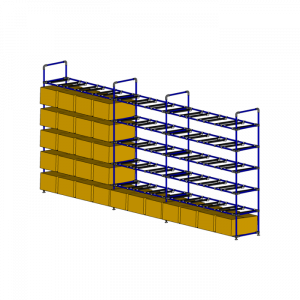
Carton flow racks are designed for lightweight products and cartons. They use roller tracks or wheels, allowing boxes to slide forward for easy picking.
Best applications of carton flow racks:
- E-commerce warehouses
- Grocery distribution centers
- Order fulfillment operations
2. Pallet
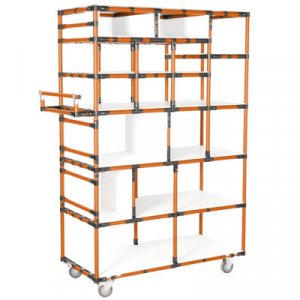
Pallet flow racks handle heavier loads and are built with durable rollers to support full pallets. These racks are perfect for high-density storage.
Advantages of pallet flow racks:
- Increased storage capacity
- Reduced forklift travel
- Ideal for cold storage and food industries
3. Gravity
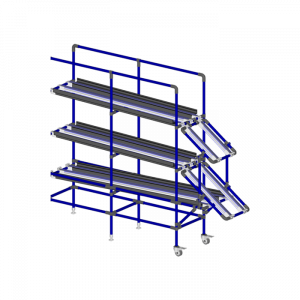
Gravity flow racks rely purely on inclined roller tracks to move products forward. They’re one of the simplest yet most efficient systems.
How gravity flow racks reduce picking time:
- Eliminates restocking delays
- Keeps picking area always stocked
- Reduces manual handling
4. Modular

Modular flow racks are adaptable and customizable, allowing you to reconfigure them as your business needs change.
Why modular racks are ideal for dynamic industries:
- Easy to assemble and modify
- Great for lean work cells
- Cost-efficient for long-term use
5. FIFO (First-In-First-Out)
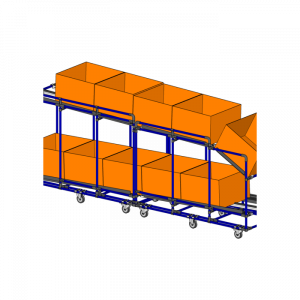
FIFO racks ensure that the oldest inventory is picked first, making them critical for industries where freshness is key.
How FIFO ensures product freshness and accuracy:
- Reduces product obsolescence
- Improves traceability
- Essential for pharmaceutical and food industries
6. Custom-Built
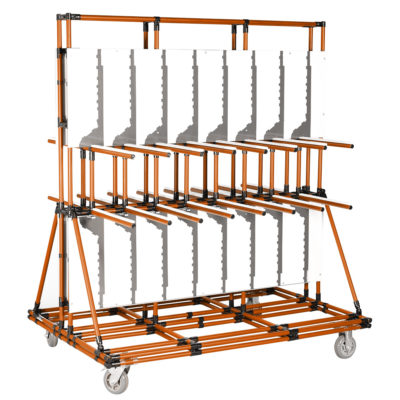
Some industries require specialized flow racks tailored to unique needs. Flexpipe’s modular system allows companies to design racks for complex workflows, oversized items, or delicate parts.
Factors to Consider When Choosing a Flow Rack System
When selecting a system, companies should evaluate:
- Storage space optimization – How well does it maximize floor usage?
- Product type and weight capacity – Light cartons vs. heavy pallets
- Flexibility and scalability – Can it adapt to changing demands?
- Cost-effectiveness and ROI – Does it reduce long-term costs?
Why Flexpipe’s Flow Rack System Stands Out
Flexpipe has become a leader in modular material handling systems, and its flow racks are among the most reliable in the industry.
Customization for Lean Manufacturing
Flexpipe’s modular design allows full customization to meet unique workflow requirements, making it a top choice for lean production environments.
Durability and Quality Design
Made from high-quality materials, Flexpipe flow racks are built to withstand heavy use while maintaining efficiency.
Cost Savings and Productivity Improvements
By reducing wasted movement and optimizing space, companies using Flexpipe’s racks see significant ROI in both productivity and cost savings.
Success Stories of Flexpipe in Action
Industries from automotive to aerospace have implemented Flexpipe systems to streamline processes, proving their versatility and reliability.
How to Implement a Flow Rack System Effectively
- Analyze workflow requirements – Study product flow, picking frequency, and storage needs.
- Select the right flow rack type – Match rack type to your industry requirements.
- Customize with Flexpipe solutions – Leverage modular racks for maximum efficiency.
- Train employees for efficiency – Ensure smooth adoption with proper training.
Conclusion
Choosing the right flow rack system can transform your warehouse or production line, cutting waste and boosting productivity. From carton flow racks to modular and custom-built systems, the right choice depends on your workflow and industry needs.
But when it comes to quality, flexibility, and long-term value, Flexpipe’s Flow Rack System stands out as the best solution for companies looking to thrive in a competitive market.
If efficiency, adaptability, and ROI matter to your business, it’s time to upgrade with Flexpipe.
FAQs
- What is the difference between flow racks and static racks?
Flow racks use gravity to move products automatically, while static racks require manual handling. - Can Flexpipe flow racks be reconfigured easily?
Yes, Flexpipe’s modular design makes reconfiguration simple and cost-effective. - How much weight can a flow rack hold?
Weight capacity varies by design, but Flexpipe racks are engineered to handle both light and heavy loads. - Do flow racks support FIFO inventory management?
Absolutely! FIFO is one of the key advantages of flow racks. - What industries benefit most from flow racks?
Industries such as automotive, e-commerce, pharmaceuticals, and food distribution gain the most. - Are Flexpipe flow racks cost-effective compared to competitors?
Yes, their durability and reconfigurability provide long-term cost savings over fixed systems.
Recent Articles