Material Supply Tips for Optimizing Production: Powerful Strategies to Boost Efficiency
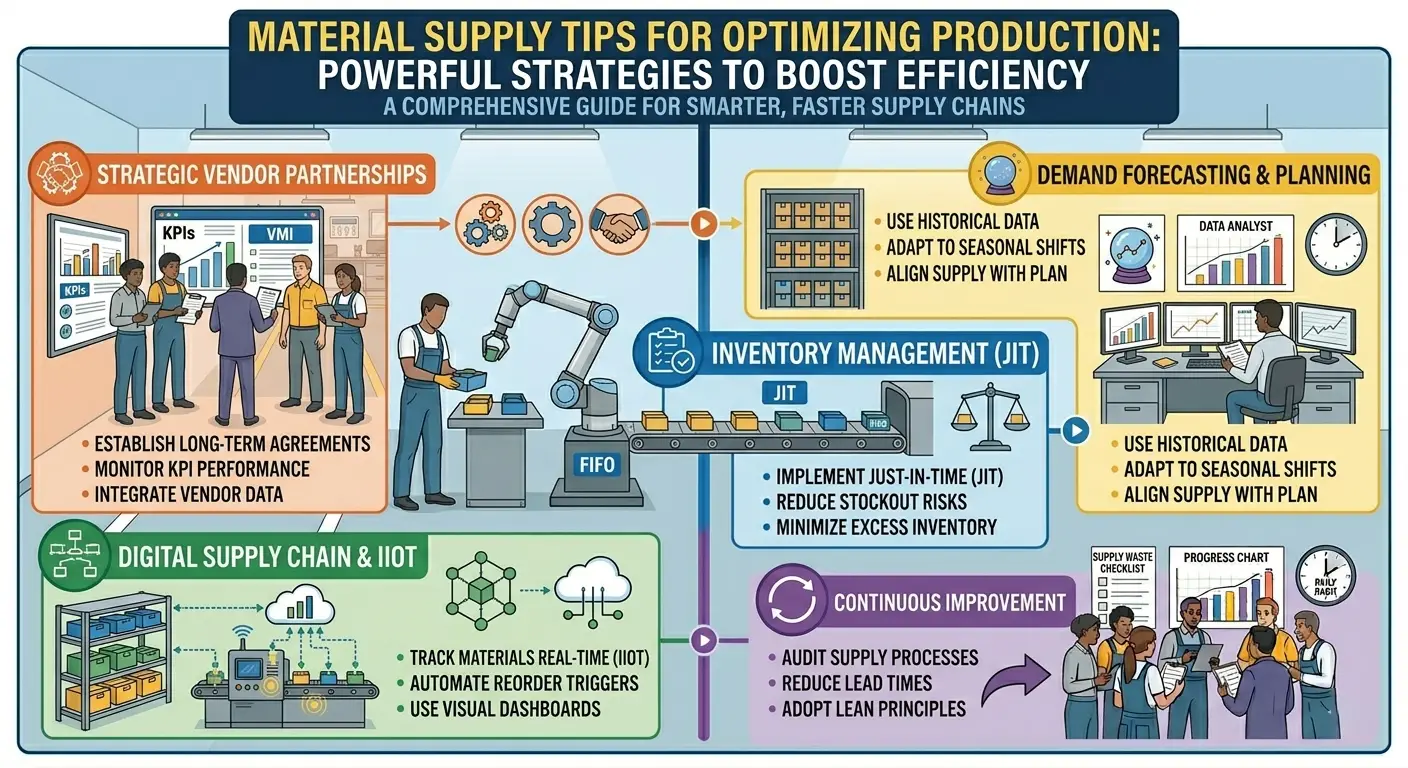
Material supply is the backbone of any manufacturing operation. Without a smooth and efficient flow of materials, even the most advanced production systems can slow down or fail. In today’s fast-paced industrial world, optimizing material supply is no longer optional; it’s essential.
When we talk about Material supply: tips for optimizing production, we’re focusing on practical ways to ensure materials are delivered at the right time, in the right quantity, and at the right place. This reduces delays, cuts costs, and improves overall productivity.
Why Material Flow Matters in Manufacturing
Efficient material flow ensures that production lines operate without interruptions.
Poor material supply can lead to:
- Production delays
- Increased labor costs
- Excess inventory
- Wasted resources
A well-optimized system keeps everything moving like clockwork, improving both speed and quality.
Common Challenges in Material Supply
Many companies struggle with:
- Overstocking or understocking
- Inefficient storage systems
- Lack of real-time inventory visibility
- Excessive manual handling
Addressing these issues is the first step toward optimization.
Understand Lean Material Supply Systems
Lean manufacturing focuses on delivering maximum value with minimal waste. It plays a huge role in improving material supply.
Principles of Lean Manufacturing
Lean systems aim to:
- Eliminate waste
- Improve workflow
- Increase efficiency
- Enhance product quality
Just-in-Time (JIT) Inventory
JIT ensures materials arrive only when needed. This reduces storage costs and prevents overstocking.
Waste Reduction Techniques
Waste in material supply can include:
- Excess motion
- Waiting time
- Overproduction
Eliminating these wastes leads to smoother operations.
Role of Efficient Layout Design
A well-planned production layout can drastically improve material flow.
Importance of Workstation Organization
Organized workstations ensure that workers can access materials quickly and easily. This reduces the time spent searching for tools or components.
Minimizing Movement and Handling Time
Reducing unnecessary movement:
- Saves time
- Reduces worker fatigue
- Improves safety
Smart layout design ensures materials move in a logical and efficient path.
Benefits of Flow Racks in Production
Flow racks are a game-changer in modern manufacturing environments.
What Are Flow Racks?
Flow racks are storage systems that use gravity to move materials from the loading side to the picking side. They ensure a first-in, first-out (FIFO) system.
FREE PLAN LIBRARY
Proven Modular Designs Used Across Manufacturing
Discover more than 400+ pre-engineered layouts developed for warehouses, assembly lines and industrial workplaces. Each plan includes practical designs for FIFO racks, gravity flow systems, workstations, carts and storage solutions, helping you reduce design time and accelerate implementation. Download the build plans free, customise them to your workflow or purchase the required Flexpipe components.
How Flow Racks Improve Material Supply
Flow racks help:
- Reduce picking time
- Improve inventory rotation
- Minimize clutter
- Enhance workflow efficiency
Flexpipe Flow Racks
When it comes to optimizing material supply, Flexpipe Flow Racks stand out as a top-tier solution.
Key Features of Flexpipe Flow Racks
Flexpipe offers innovative flow rack systems designed for flexibility and efficiency.
Modular Design and Flexibility
Flexpipe flow racks are:
- Fully modular
- Easy to assemble and reconfigure
- Adaptable to changing production needs
This flexibility makes them ideal for dynamic manufacturing environments.
Improved Ergonomics and Safety
The design focuses on worker comfort and safety by:
- Reducing bending and reaching
- Ensuring smooth material flow
- Minimizing workplace injuries
By integrating Flexpipe Flow Racks, companies can significantly enhance their material supply systems.
Inventory Management Optimization
Efficient inventory management is key to maintaining a steady material supply.
Real-Time Tracking Systems
Using digital tools helps track inventory levels instantly, reducing errors and improving decision-making.
Demand Forecasting Techniques
Accurate forecasting ensures that materials are available when needed, avoiding shortages or excess stock.
Automation in Material Supply
Automation is transforming how materials are handled in production.
Role of Robotics and AI
Robots can:
- Transport materials
- Reduce human error
- Increase efficiency
Smart Warehousing Solutions
Automated storage systems improve accuracy and speed, making material supply more reliable.
Reducing Downtime Through Better Supply
Downtime can be costly. Optimizing material supply helps prevent it.
Preventive Planning
Planning ahead ensures materials are always available, reducing unexpected delays.
Quick Replenishment Systems
Fast replenishment keeps production lines running smoothly without interruptions.
Workforce Training and Engagement
People play a crucial role in material supply optimization.
Importance of Skilled Operators
Trained workers can:
- Handle materials efficiently
- Identify issues
- Improve overall productivity
Continuous Improvement Culture
Encouraging innovation and feedback leads to ongoing improvements in material supply processes.
Sustainability in Material Supply
Sustainability is becoming increasingly important.
Eco-Friendly Packaging
Using recyclable materials reduces environmental impact.
Energy-Efficient Systems
Efficient systems consume less energy, lowering costs and supporting sustainability goals.
Conclusion
Optimizing material supply is essential for any business aiming to improve production efficiency. From lean principles to smart storage solutions, every step plays a vital role.
Implementing Material supply: tips for optimizing production strategies, especially using advanced systems like Flexpipe’s Flow Racks, can transform your workflow. These solutions not only enhance efficiency but also create a safer and more productive work environment.
By focusing on continuous improvement, smart technology, and efficient design, businesses can stay competitive and thrive in today’s demanding manufacturing landscape.
FAQs
- What is material supply in production?
Material supply refers to the process of delivering raw materials and components to the production line efficiently.
- Why is optimizing material supply important?
It reduces costs, improves efficiency, and ensures smooth production operations.
- How do flow racks help in production?
Flow racks improve organization, reduce picking time, and ensure FIFO inventory management.
- What makes Flexpipe Flow Racks unique?
Their modular design, flexibility, and ergonomic benefits make them highly effective for modern production systems.
- Can automation improve material supply?
Yes, automation increases speed, accuracy, and efficiency in handling materials.
- What are the key challenges in material supply?
Common challenges include poor inventory management, inefficient layouts, and a lack of real-time data.
Recent Articles