
How Fasteners Are Made: From Raw Steel to Precision Parts
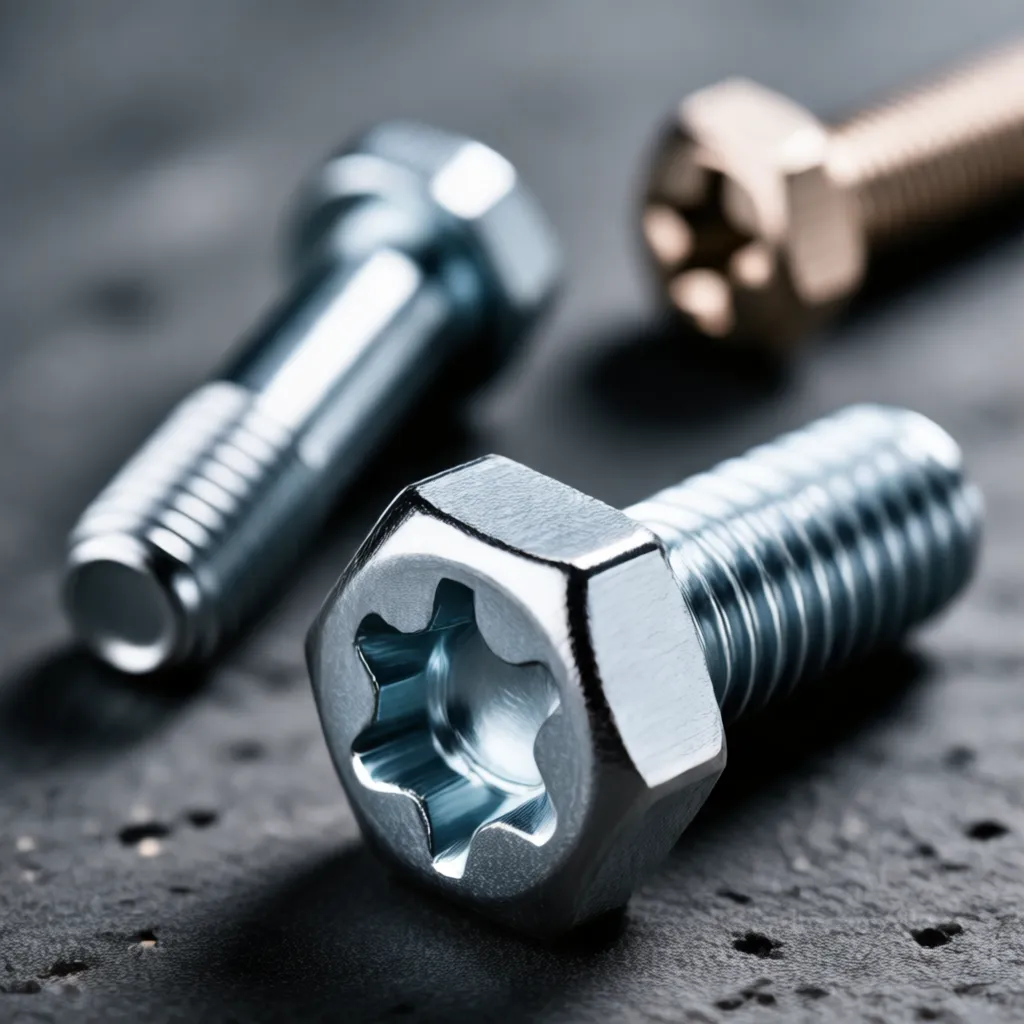
Fasteners, screws, bolts, nuts, rivets, and washers are among the unsung heroes of engineering. Though tiny, they play a critical role in virtually every sector: automotive, construction, electronics, aerospace, machinery, plumbing, and more. Without reliable fasteners, structures fail, machines loosen, and safety becomes a concern.
Understanding how fasteners are made gives insight into their performance, cost, and reliability. In this post, we’ll walk through the full life cycle of a fastener, from raw material to finished product, and highlight how Flexpipe’s Fasteners combine precision engineering and rigorous quality control to deliver excellence.
What Are Fasteners?
A fastener is a hardware component that mechanically joins or affixes two or more parts together. What distinguishes fasteners is that many (though not all) allow disassembly, unlike welding or adhesives.
Common types include:
- Bolts & Screws: External threads, used with or without nuts
- Nuts: Internal (female) threads to pair with bolts
- Rivets: Permanent fastening by deformation
- Washers: Not strictly fasteners but used in conjunction (load distribution, locking)
- Threaded Rods, Inserts, Anchors: Specialized fasteners for specific use cases
Each kind has variants (hex, socket, countersunk, flange, self-tapping, etc.), and the manufacturing method adapts accordingly.
Materials Used in Fasteners
The choice of material dictates strength, corrosion resistance, weight, cost, and application environment.
Typical materials include:
- Carbon Steel/Alloy Steel: Most common, strong, affordable
- Stainless Steel: For corrosion resistance (e.g. marine, food, medical)
- Aluminum/Nonferrous Alloys: Lightweight applications
- Brass/Copper/Bronze: For aesthetic or conductive uses
- Titanium & Nickel Alloys: High-strength, lightweight, extreme environments
Materials often begin as wire or bar stock and must meet strict chemical composition standards.
Major Manufacturing Methods
There are three broadly used methods to manufacture fasteners:
- Cold forming (cold heading/cold forging), forging at or near room temperature
- Hot forging, forging at elevated temperature, especially for large or tough materials
- Machining, cutting away material when forming, cannot be done purely by deformation
Each has tradeoffs in cost, speed, strength, material compatibility, and complexity.
Step-by-Step Process of Fastener Making
Here’s a typical production workflow (especially for screws/bolts) in industrial setups:
- Wire Drawing/Bar Stock Preparation
Steel arrives as large coils or bars. It’s drawn through dies to reduce diameter, improve surface finish, and ensure uniformity. - Uncoiling, Straightening & Cutting/Blank Preparation
The wire is uncoiled, straightened (to remove bends), and cut to predetermined lengths (blanks). - Cold Forming/Heading/Upsetting
The blank is forged in several stages (multi-die headers) to form the head (hexagonal, flange, etc.) and sometimes the initial shaft shape. Each successive station deforms the part closer to its final geometry.
This process is also known as “heading” in metalworking. - Trimming/Finishing the Head
Excess material is trimmed (flash removal), edges defined, and features finalized. - Thread Rolling or Thread Cutting/Threading
- Thread rolling is preferred for mass production: threads are pressed into the shaft under high pressure, displacing metal rather than cutting it. This preserves grain flow and strength.
- Thread cutting or tapping is used for custom or small-volume parts where rolling is impractical.
- Heat Treatment/Tempering/Quenching
To achieve desired mechanical properties, hardness, toughness, and ductility, the part is heated, quenched, and tempered. This step is essential, especially for high-strength fasteners. - Surface Treatment/Coating/Plating
For corrosion protection, aesthetics, or special functionalities. Common treatments include:- Zinc plating/electrogalvanizing
- Hot-dip galvanizing
- Black oxide
- Passivation (for stainless)
- Other proprietary coatings
- Pretreatment steps such as pickling, cleaning, degreasing, and descaling are done before coating.
- Final Inspection & Quality Control
Dimensional checks, hardness tests, tensile tests, thread gauge checks, coating thickness, and visual inspection. Products must conform to standards such as ISO, ASTM, or national standards (or IFI – Industrial Fasteners Institute). - Packaging, Labeling & Shipping
Fasteners are packaged in protective containers, sometimes with desiccants, labelled by size, grade, finish, batch number, and shipped under controlled conditions.
Cold Forming/Cold Heading (In Detail)
Cold forming is one of the most used techniques for standard fasteners because:
- It is fast and economical for high volumes
- It preserves material (no cutting waste)
- It improves strength via work hardening, and the metal grain structure aligns with the part geometry
- It yields a good surface finish
In a cold header machine, the wire is fed, clipped to length, and then travels through multiple dies and punches. Each station progressively shapes the part (e.g. upset, extrude, upset again). Multi-die headers can execute complex geometries.
However, cold forming faces limitations: large diameter fasteners, sharp internal features, or brittle materials may be beyond what cold forming can handle reliably.
Hot Forging: When and Why It’s Used
Hot forging heats the workpiece above the recrystallization temperature, making the material more ductile and easier to deform.
It’s frequently used for:
- Large-diameter fasteners (e.g. M36 and above)
- Tough materials (nickel alloys, titanium) that don’t cold form well
- Complex or nonstandard shapes
Advantages: easier deformation, ability to handle complex shapes, and less forging force required. Disadvantages: diminished work hardening effects, more energy, additional steps like surface finishing (raw surface)
Machining: For Specialty Fasteners
When a fastener has a complicated geometry or low volume that doesn’t justify forming dies, machining (turning, milling, drilling) is used. This involves material removal (chips) to arrive at the final shape.
Machining is comparatively slow, has more waste, and interrupts grain flow, lowering potential strength. But for prototypes, custom or rare parts, machining is indispensable.
Threading and Thread Rolling/Cutting
Threading is a critical step since threads must be precise and durable.
- Thread rolling: The typical method for mass fasteners. The blank is pressed between hardened dies that imprint the threads. This process displaces metal, retains grain flow, and yields strong threads.
- Thread cutting/tapping: Material is removed (cut) to form threads. Useful for internal threads, special pitches, or low quantities.
Sometimes a combination is used, e.g. roll the major part, cut relief portions.
Heat Treatment & Tempering
Once the fastener geometry is established, heat treatment tailors the mechanical properties.
Basic sequence:
- Quenching: rapidly cooling from high temperature to harden
- Tempering: reheating to reduce brittleness and impart toughness
- Normalizing/annealing in some cases
This step ensures the fasteners can handle tensile loads, fatigue, and other stresses.
Often, after heat treatment, threads or dimensions may slightly shift, so reworking or rechecking is required.
Surface Treatment & Coating
To protect against corrosion or improve appearance, fasteners undergo finishing treatments.
Common methods:
- Zinc plating/electroplating
- Hot-dip galvanizing
- Black oxide
- Passivation (for stainless steel)
- Other specialty coatings
Pre-treatment is essential: pickling, degreasing, cleaning, and fluxing to ensure coating adhesion. After coating, parts may be centrifuged to remove excess, rinsed, and dried.
For instance, bolt producers often submerge parts in molten zinc and then remove excess zinc via centrifuge.
Quality Control, Testing, Standards
Quality is paramount. Some key QC steps:
- Dimensional Inspection, measuring diameters, lengths, head dimensions, and thread pitch
- Mechanical Testing, tensile strength, proof load, and hardness
- Coating/Plating Checks, thickness, adhesion, uniformity
- Thread Gauge Testing
- Visual Inspection, surface defects, cracks, burrs
Fasteners must conform to recognized standards (ISO, ASTM, DIN, IFI). The Industrial Fasteners Institute (IFI) publishes the IFI Fastener Technology Handbook, widely used as a design and inspection reference.
Only after passing all inspections can parts be approved for packaging and shipment.
Packaging & Logistics
Fasteners are packaged in bulk containers, segmented boxes, or trays.
Some precautions:
- Use desiccants or moisture barriers if plated
- Batch labeling (size, grade, coating, lot number)
- Protective inner packaging to avoid damage
- Organized logistics ensures correct supply to industries (automotive, construction, OEMs)
Sustainability & Efficiency in Fastener Manufacture
Modern fastener manufacturers strive for:
- Material efficiency (minimal scrap) by forming rather than cutting
- Recycling scrap and chips
- Energy-efficient processes (optimized heating, cooling)
- Lean manufacturing and process optimization
- Use of closed-loop systems for plating and wastewater
These not only reduce costs but also reduce the environmental footprint of fastener production..
Why Choose Flexpipe’s Fasteners?
Here’s a summary of the key advantages:
|
Feature |
Benefit to You |
|
Tight Tolerances |
Accurate fit, reduced rework |
|
Certified Quality |
Confidence in strength, durability |
|
Wide Product Range |
One-stop sourcing for most fastener needs |
|
Custom & Specialty Options |
Adaptable to unique application demands |
|
Traceability & Support |
Accountability, warranty, documentation |
|
Reliable Supply Chain |
Consistent delivery, even in bulk |
Customers in sectors like construction, heavy machinery, renewable energy, pipeline systems, and large infrastructure projects trust Flexpipe for their fastener needs.
Conclusion
From raw steel wire through a series of precise, controlled manufacturing steps, fasteners evolve into critical components that hold our world together. The process demands engineering, quality control, and continuous innovation. Among the manufacturers in this space, Flexpipe’s Fasteners stand out for their exacting standards, comprehensive product range, and commitment to performance.
If you’re sourcing fasteners for your next project, whether standard sizes or custom specials, consider Flexpipe’s Fasteners. Reach out for product catalogs, technical specifications, or a quotation. Give your assemblies the fasteners they deserve.
FAQs
- Why are most fasteners manufactured by cold forming rather than machining?
Cold forming is faster, produces minimal waste (no chips), and imparts work-hardening to the part, boosting mechanical strength. Machining, while flexible, is slower and wasteful. - Can all sizes and shapes of fasteners be made by cold forming?
No. Very large diameters, complex internal features, or brittle materials often require hot forging or machining. - What makes thread rolling better than cutting?
Thread rolling deforms material rather than removing it, preserving grain structure and strength. Rolled threads are typically stronger, more fatigue-resistant, and more accurate. - How critical is heat treatment?
Extremely. It defines hardness, ductility, and toughness, and ensures the fastener can perform under loads without brittle failure. - Why do fasteners require coatings or plating?
To protect against corrosion (rust), improve wear resistance, and sometimes for aesthetic or identification needs. - What quality standards do fasteners follow?
Common standards include ISO (e.g. ISO 898 for mechanical properties), ASTM (various grades), DIN, and industry-specific norms. The IFI Fastener Technology Handbook is also a key reference.
Recent Articles