Lean Strategies for Optimizing Warehouse Layout
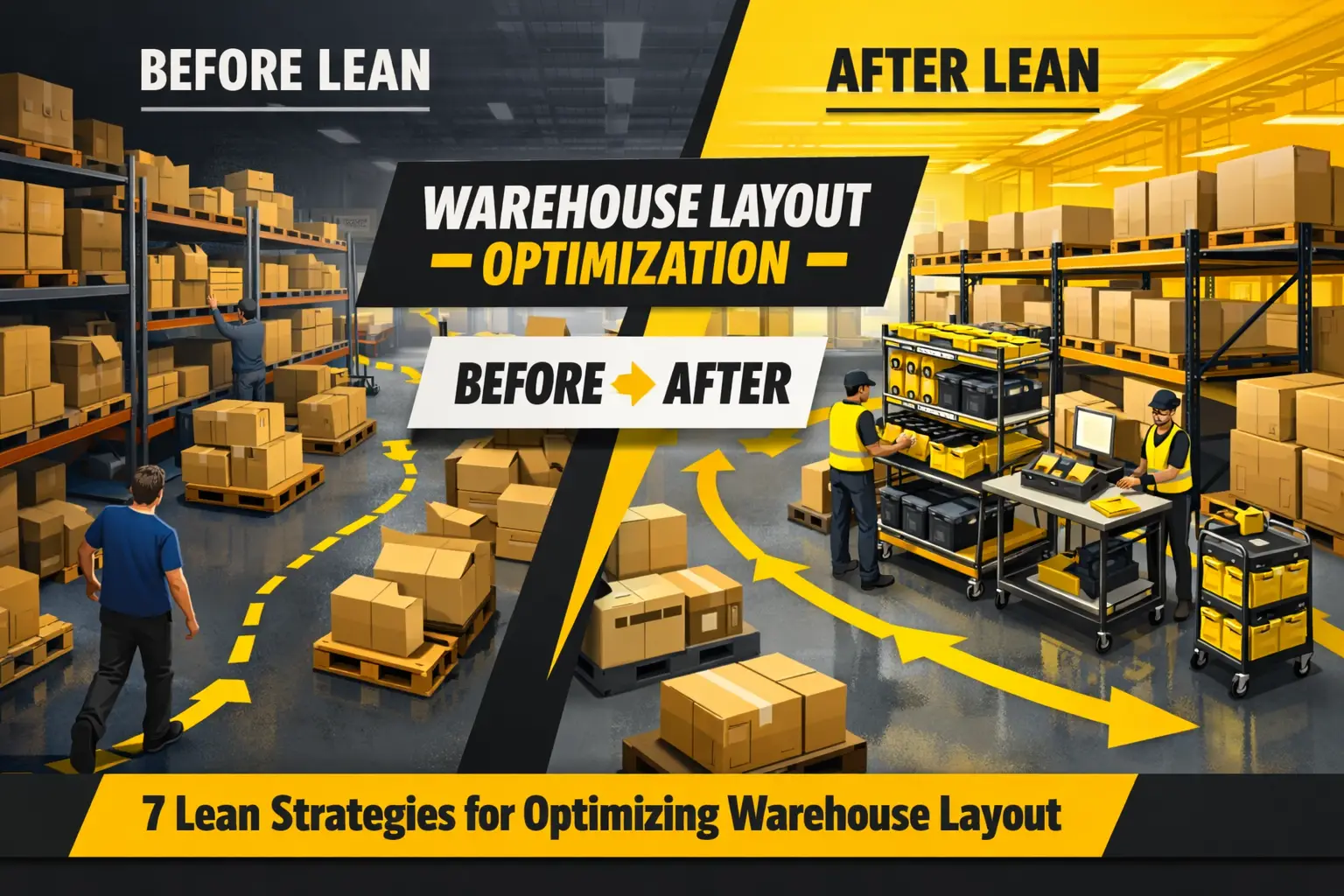
Efficient warehouse design is critical for businesses that want to stay competitive in today’s fast-paced supply chain environment. Implementing Lean Strategies for Optimizing Warehouse Layout can dramatically improve productivity, reduce operational waste, and create safer working environments.
Lean principles focus on maximizing value while minimizing waste. When applied to warehouse layout planning, these strategies help streamline product flow, reduce unnecessary movement, and ensure every square foot of space contributes to operational efficiency.
One solution gaining attention in modern warehouses is Flexpipe modular material handling system. This innovative system allows companies to build flexible workstations, flow racks, carts, and storage structures that adapt quickly to changing operational needs.
In this post, we’ll explore the most effective lean strategies for warehouse layout optimization and show how Flexpipe’s modular system supports these improvements.
Understand Lean Warehouse Principles
Before diving into layout strategies, it’s important to understand the core principles behind lean warehouse management.
Lean operations aim to eliminate the eight types of waste commonly found in logistics environments:
- Excess motion
- Overproduction
- Waiting time
- Excess inventory
- Unnecessary transportation
- Overprocessing
- Defects
- Underutilized talent
When warehouses apply lean thinking, the focus shifts from simply storing goods to creating efficient product flow.
A well-designed layout ensures:
- Faster picking and packing
- Reduced employee travel time
- Improved safety
- Higher throughput
- Lower operational costs
Why Warehouse Layout Optimization Matters
An inefficient warehouse layout can create serious operational problems.
Common Warehouse Layout Issues
- Congested aisles
- Poorly placed inventory
- Long travel distances for workers
- Inefficient picking paths
- Inflexible storage systems
These issues slow down operations and increase labor costs.
By implementing Lean Strategies for Optimizing Warehouse Layout, companies can significantly improve performance.
Key Benefits of Layout Optimization
|
Benefit |
Impact |
|
Faster order fulfillment |
Improved customer satisfaction |
|
Reduced travel distance |
Higher productivity |
|
Better space utilization |
Lower facility costs |
|
Improved safety |
Fewer accidents |
|
Scalability |
Easier expansion |
Strategy 1: Map Your Current Warehouse Workflow
The first step in lean optimization is understanding your current process.
Conduct a Value Stream Mapping (VSM)
Value stream mapping helps identify:
- Product movement
- Process delays
- Bottlenecks
- Unnecessary handling
Create a visual map showing how goods move through the warehouse from receiving to shipping.
Questions to Ask
- Where do employees spend the most time walking?
- Where do products wait in queues?
- Which areas experience congestion?
Once these issues are identified, layout changes can be made to eliminate waste.
Strategy 2: Reduce Travel Distance
Travel time is one of the largest sources of waste in warehouses.
Studies show that walking can consume up to 50% of picking labor time.
Ways to Minimize Movement
- Place fast-moving items near shipping areas
- Use zone picking
- Group similar SKUs together
- Design shorter picking paths
Use Flow Racks for Efficient Access
Flow racks ensure that products move forward automatically through gravity.
This allows workers to:
- Access items faster
- Reduce reaching and bending
- Maintain FIFO inventory flow
Flexpipe’s modular flow rack systems make it easy to build custom configurations that support lean movement patterns.
Strategy 3: Implement Flexible Storage Systems
Traditional warehouse shelving can be rigid and difficult to modify.
As product demand changes, static systems often become inefficient.
Why Flexibility Matters
Modern warehouses must adapt quickly to:
- Seasonal demand spikes
- SKU growth
- Process improvements
- Automation integration
How Flexpipe’s Modular System Helps
Flexpipe offers a modular pipe and joint system that allows warehouses to build custom structures, such as:
- Flow racks
- Workstations
- Cart systems
- Storage racks
- Material handling trolleys
Because the system is modular, teams can reconfigure layouts quickly without specialized tools or welding.
Benefits include:
- Faster layout adjustments
- Lower installation costs
- Improved ergonomics
- Reusable components
This flexibility supports continuous improvement, a core lean principle.
Strategy 4: Optimize Picking Zones
Dividing the warehouse into functional picking zones improves productivity and reduces congestion.
Common Warehouse Zones
- Receiving
- Storage
- Picking
- Packing
- Shipping
Within these zones, further segmentation can improve efficiency.
Examples
- Fast-moving SKU zone
- Bulk storage zone
- Returns processing area
Using modular racks from Flexpipe, warehouses can easily adjust these zones as demand changes.
This adaptability ensures that high-volume products always stay in optimal locations.
Strategy 5: Improve Ergonomics for Workers
Lean systems prioritize worker efficiency and safety.
Poorly designed workstations lead to:
- Fatigue
- Injuries
- Slower performance
Key Ergonomic Improvements
- Adjustable workstation heights
- Tilted picking shelves
- Easy-access storage
- Reduced bending and reaching
Flexpipe’s modular workstation systems allow companies to design ergonomically optimized work areas that improve employee comfort and productivity.
Strategy 6: Use Visual Management
Visual management is a core component of lean operations.
It helps workers instantly understand workflow, inventory levels, and operational priorities.
Examples of Visual Systems
- Color-coded racks
- Floor markings
- Labelled storage zones
- Kanban systems
Flexpipe structures can be integrated with visual management tools, making it easier to implement lean processes throughout the warehouse.
Strategy 7: Design for Continuous Improvement
Lean warehouses are never static.
Processes should evolve as business needs change.
Continuous Improvement Techniques
- Regular layout audits
- Employee feedback sessions
- Performance tracking
- Small layout experiments
Because Flexpipe systems are modular, companies can test new layouts without major investments.
This allows warehouses to continuously refine operations without disrupting workflow.
Example: Lean Warehouse Layout Using Flexpipe
Below is a simplified example of how a warehouse can apply lean principles using modular systems.
|
Area |
Lean Improvement |
Flexpipe Solution |
|
Picking zone |
Shorter travel paths |
Modular flow racks |
|
Packing station |
Ergonomic setup |
Adjustable workstations |
|
Material transport |
Reduced manual carrying |
Custom carts |
|
Storage |
Better FIFO control |
Gravity racks |
This combination creates a lean, flexible, and scalable warehouse environment.
Conclusion
Implementing Lean Strategies for Optimizing Warehouse Layout is one of the most effective ways to improve warehouse performance. By reducing waste, minimizing worker movement, and designing flexible storage systems, companies can significantly boost productivity and reduce costs.
Solutions like Flexpipe’s modular material handling system make lean transformation easier by providing adaptable, scalable infrastructure that evolves alongside your warehouse operations.
Whether you’re redesigning a facility or making incremental improvements, combining lean principles with modular systems creates a warehouse that is efficient, flexible, and future-ready.
FAQs
- What are lean strategies in warehouse management?
Lean strategies focus on eliminating waste, improving workflow efficiency, and maximizing productivity within warehouse operations.
- Why is warehouse layout important in lean logistics?
Warehouse layout determines how efficiently goods move through the facility. A well-designed layout reduces travel time, congestion, and handling errors.
- What is the biggest waste in warehouse operations?
Excess employee movement is one of the largest sources of waste. Optimizing layout and storage locations can dramatically reduce this inefficiency.
- How does modular equipment support lean warehouses?
Modular systems like Flexpipe allow companies to quickly redesign workstations, racks, and carts to match changing operational needs.
- What is a flow rack in warehouse design?
A flow rack uses gravity to move products forward automatically, supporting FIFO inventory and reducing worker movement.
- How often should warehouse layouts be reviewed?
Experts recommend reviewing layouts at least once per year or whenever major operational changes occur.
Recent Articles