corrugated-box-manufacturer-lean-manufacturing-case-study
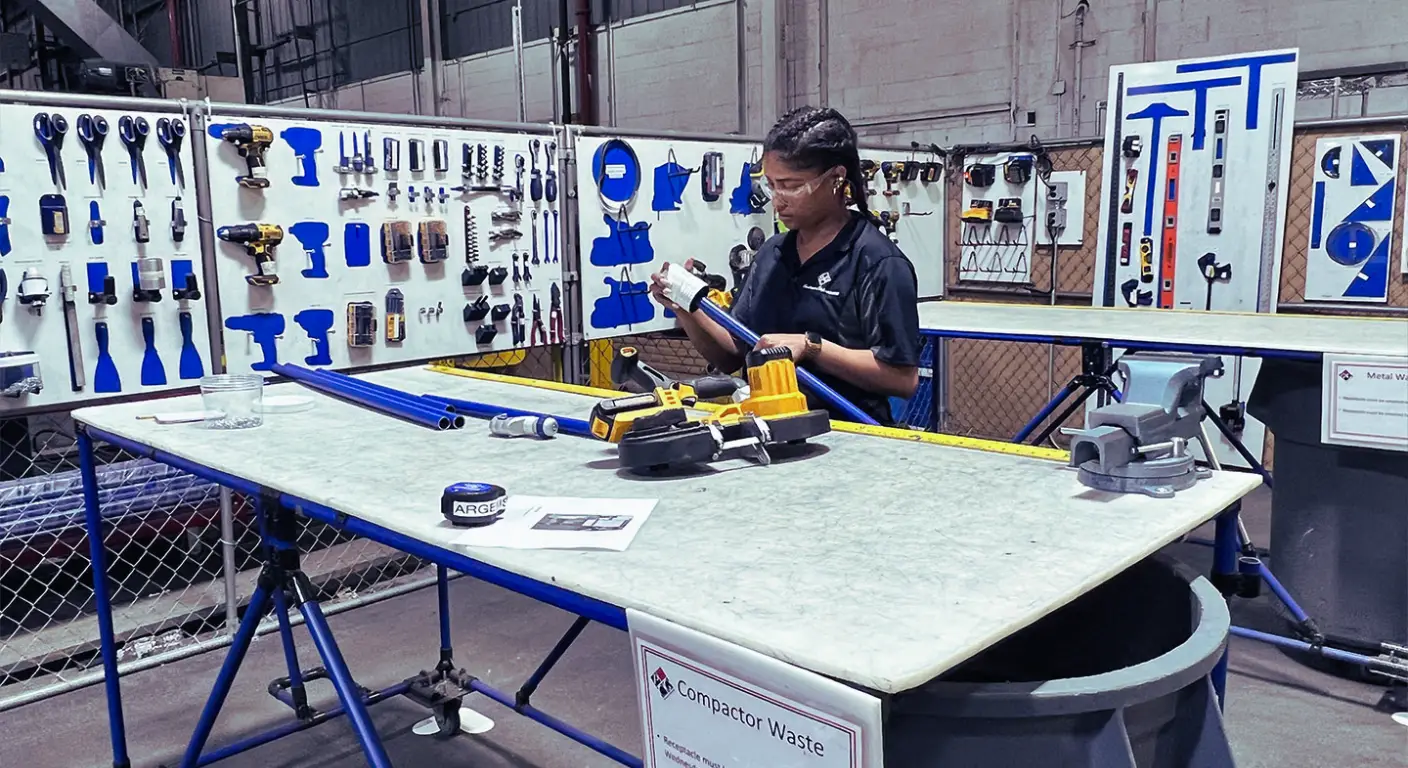
Lean manufacturing is not achieved through one major project. It develops through hundreds of practical improvements that remove waste, improve workplace organisation and make everyday tasks easier for employees.
President Container, a major corrugated box manufacturer, used Flexpipe’s modular pipe-and-joint system to support its lean transformation. The business created visual work areas, mobile transport solutions, tool storage, shelving and custom material-handling structures that could be adjusted whenever operational requirements changed.
Although this case study originated in North America, the lessons apply directly to Australian manufacturers looking to improve visual management, material flow, workplace efficiency and employee involvement.
Quick summary: President Container used modular Flexpipe structures to reduce tool-search time, improve workplace visibility, support employee suggestions and create reusable solutions without relying on expensive fixed steel fabrication.
What does it mean to be lean?
Lean manufacturing is a systematic approach to creating more customer value while reducing waste.
It is closely connected with 5S workplace organisation:
- Sort unnecessary items.
- Set in order the items that remain.
- Shine and maintain the workplace.
- Standardise the improved method.
- Sustain the new system over time.
Lean workplaces use clear visual cues, organised tools, standardised processes and efficient material flow. Employees should be able to identify what they need, where it belongs and whether something is missing without spending unnecessary time searching.
A lean system must also remain flexible. Organisations need to identify a problem, test a solution, assess the result and adjust the design as production requirements change.
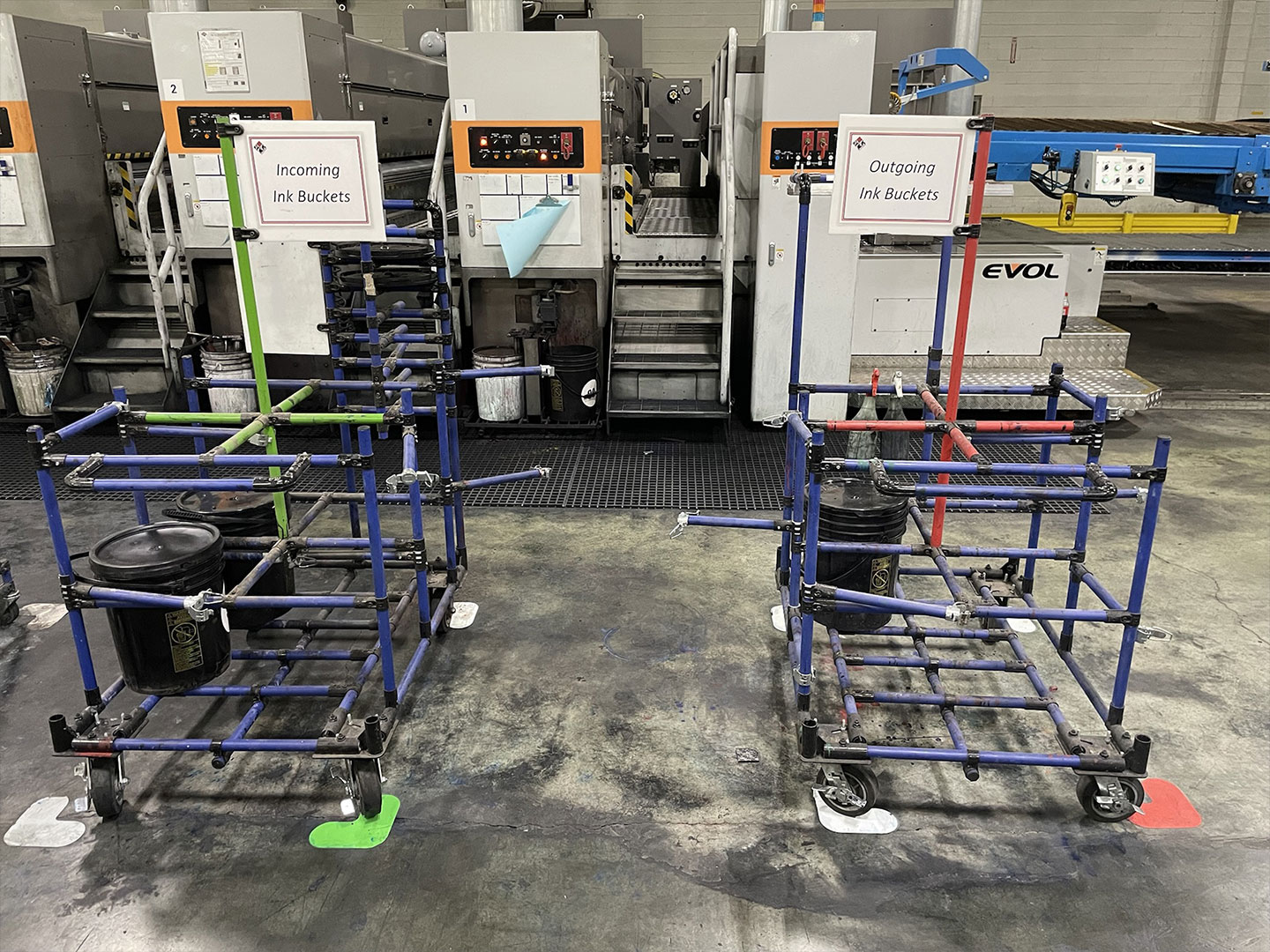
In President Container’s case, they used this flexibility to full effect by making Flexpipe a critical component in their lean visual workplaces
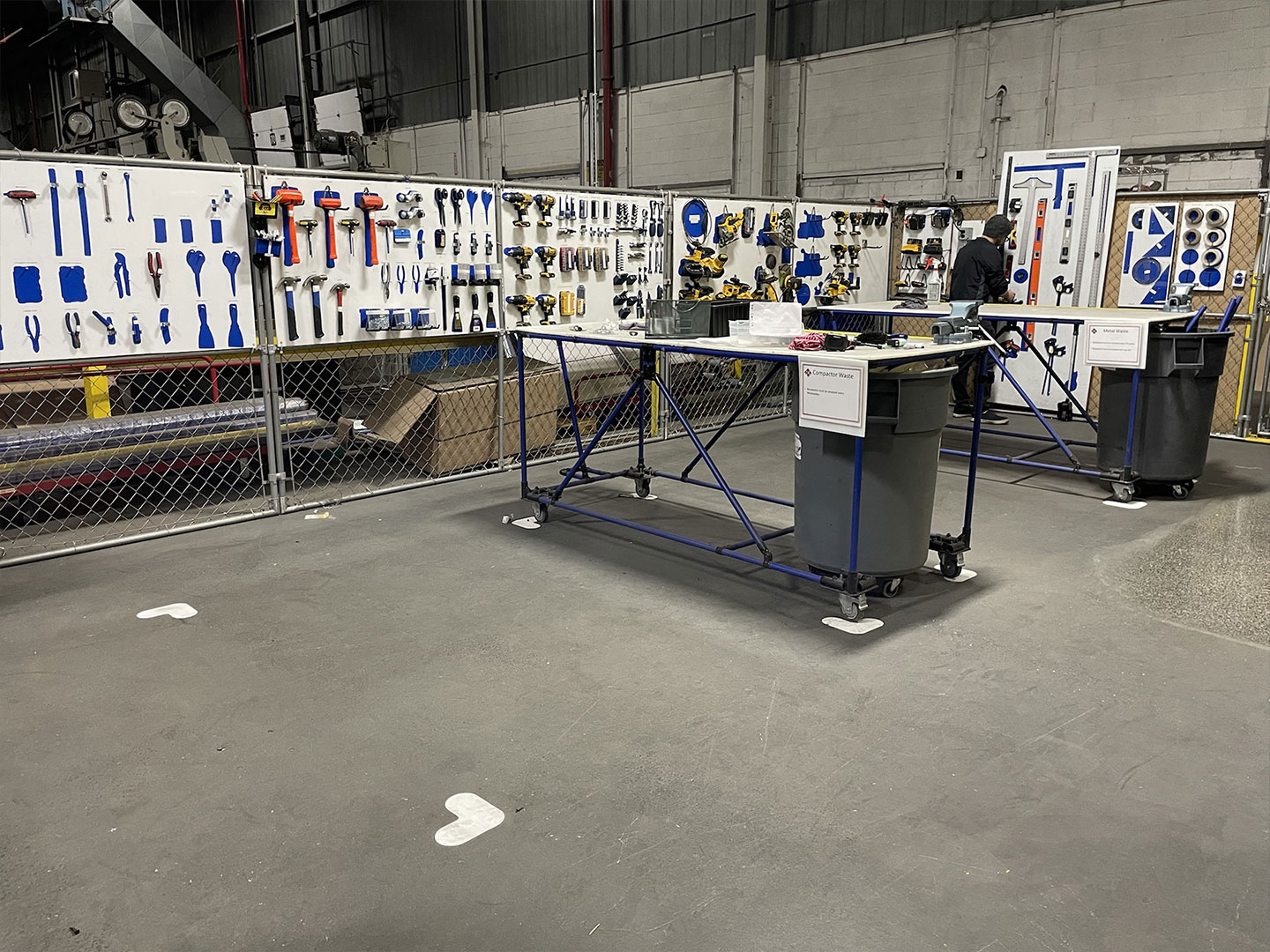
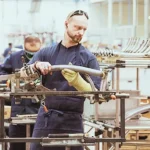
This workshop is a real paradise for every maintenance guy!
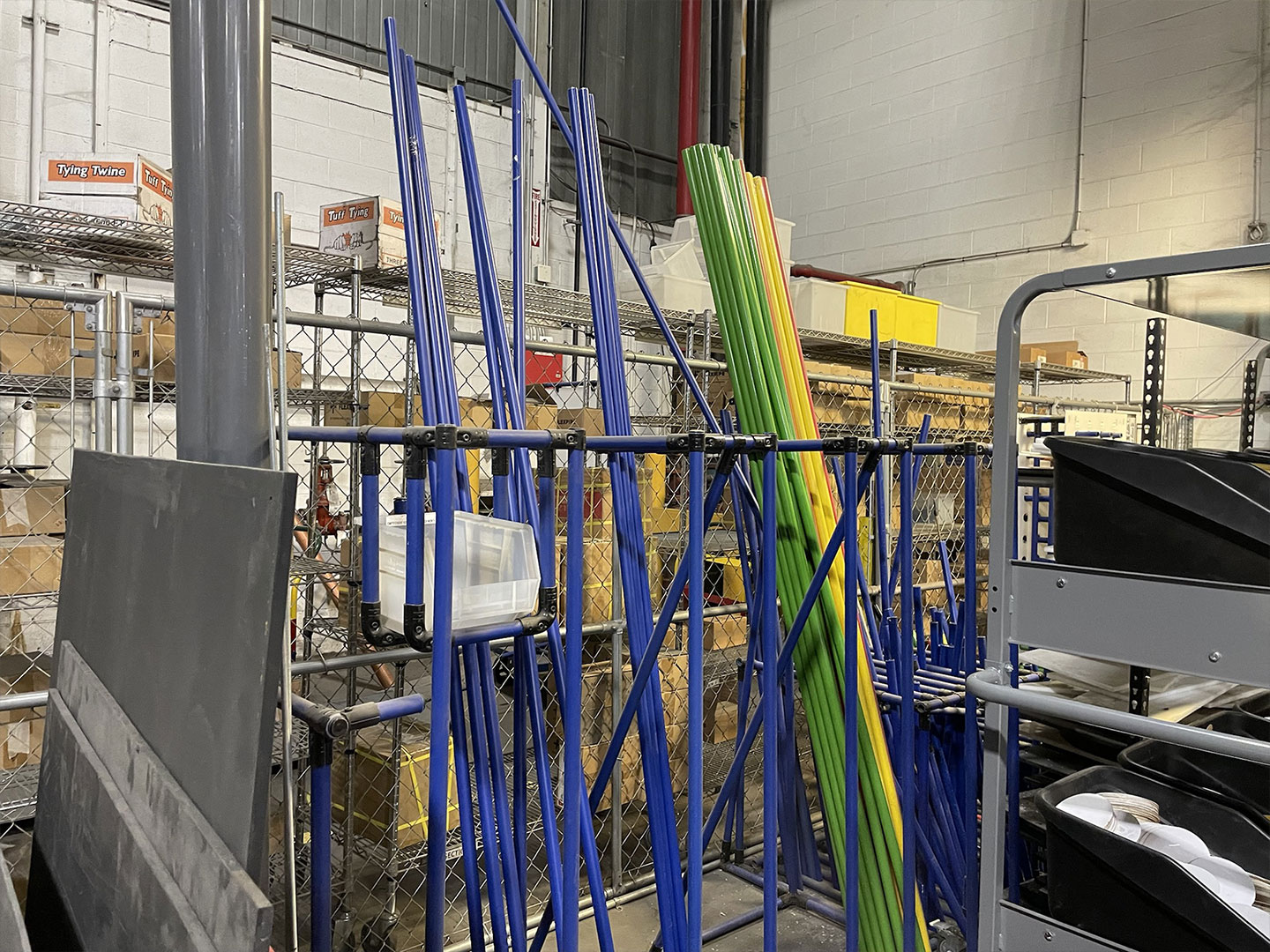
A stock of pipes ready for a new continuous improvement project.
FREE PLAN LIBRARY
400+ pre-engineered plans, free to download
Carts, workstations, flow racks and more — get the full build plan in PDF or SketchUp or add the parts straight to your cart.
Why modularity matters in continuous improvement
Traditional welded structures are normally designed for one fixed purpose. Once fabricated, they can be difficult or expensive to modify.
A modular system provides a different approach. Pipes, joints, shelves, wheels and accessories can be assembled into:
- Workstations
- FIFO flow racks
- Picking trolleys
- Kitting carts
- Tool boards
- Storage racks
- Mobile work cells
- Material transport structures
When the original design no longer suits the process, components can be reused to build something new.
This adaptability is important for Australian manufacturers managing changing product dimensions, production volumes, layouts or employee requirements.
Turning the factory into a visual workplace
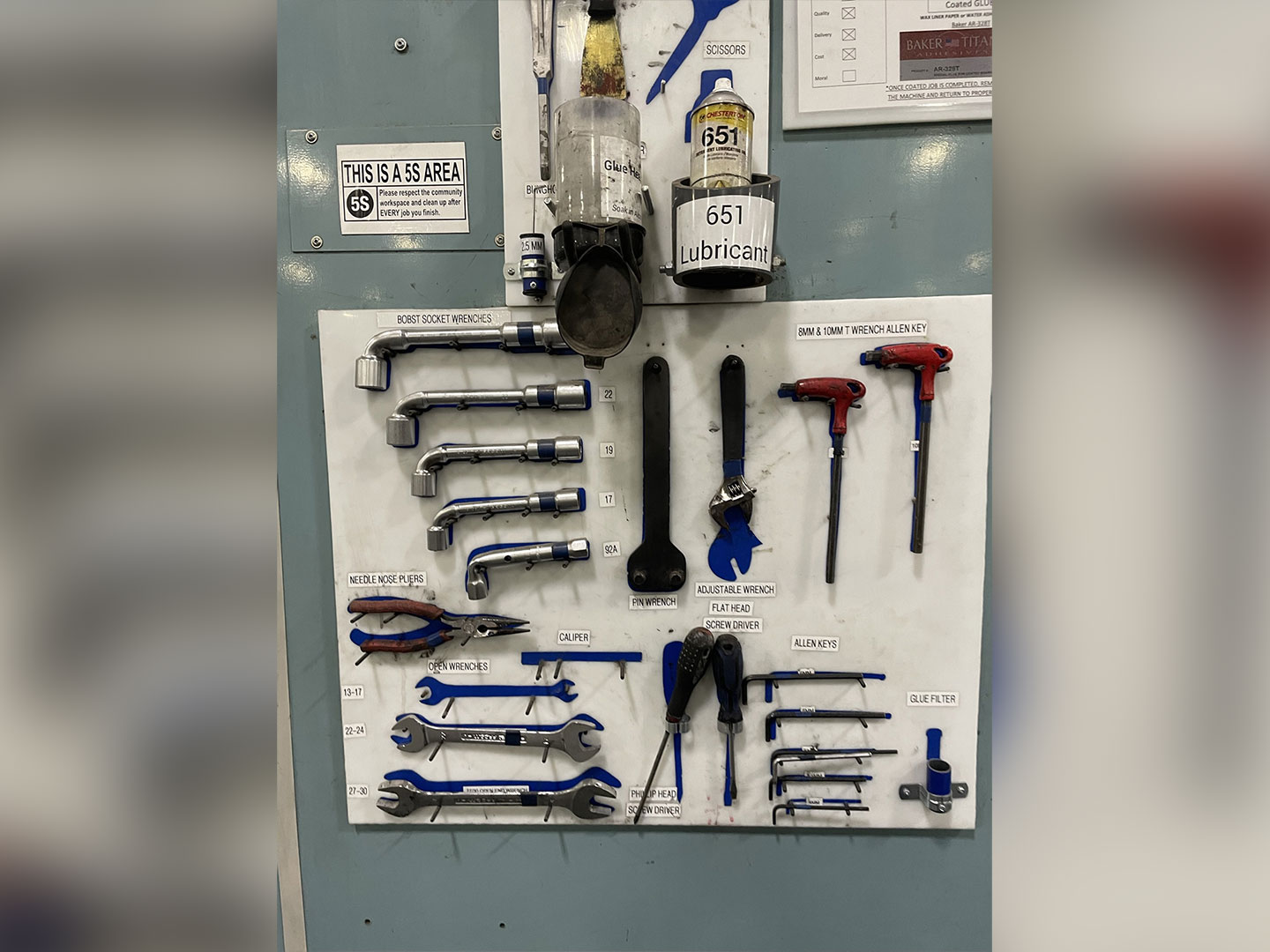
Creating a visible workplace means employees see an organization invested in its success and theirs.
President Container used Flexpipe structures as a key part of its visual workplace strategy.
Before the improvements, employees could spend significant time locating tools. Different teams sometimes followed their own storage methods, and important equipment was not always returned to a standard location.
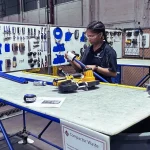
The company created organised storage and visual systems that made tools easy to identify and access. According to its continuous improvement manager, a task that previously involved about 10 minutes of searching could be reduced to only a few seconds.
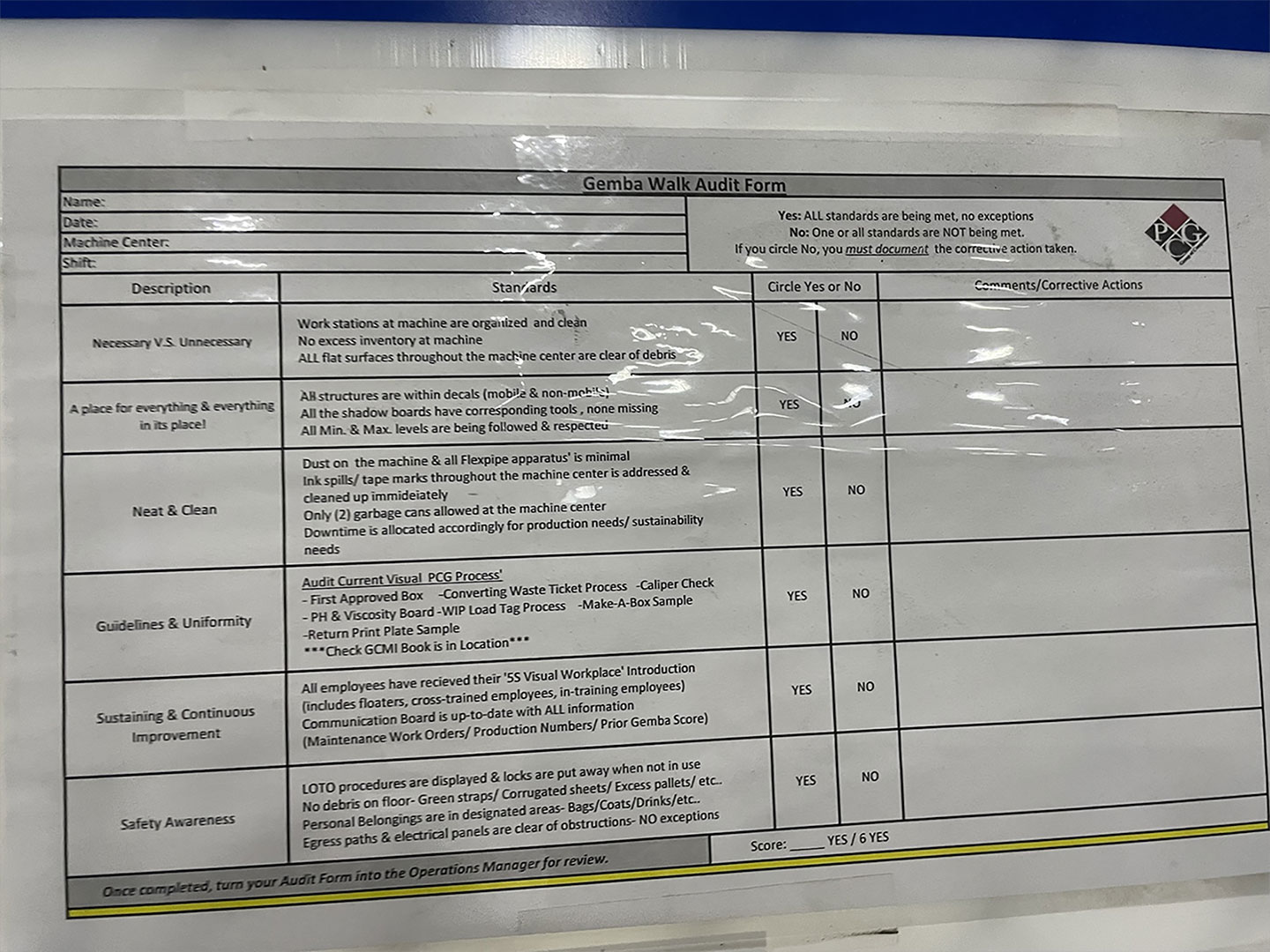
Audits and Gemba walks are all part of President Container’s continuous feedback loop.
This type of improvement may appear small, but the accumulated impact across multiple employees and shifts can be substantial.
|
Before improvement |
After visual workplace organisation |
|
Tools stored in different locations |
Standard location for each tool |
|
Employees rely on memory |
Visual cues show where items belong |
|
Time lost searching |
Faster retrieval |
|
Knowledge stays with individuals |
New employees can understand the system |
|
Missing tools are noticed late |
Gaps are visible immediately |
A visual workplace also communicates that the organisation is investing in its employees. Clean, logical and well-maintained work areas can support safety, morale and productivity.
Standardisation reduces reliance on individual knowledge
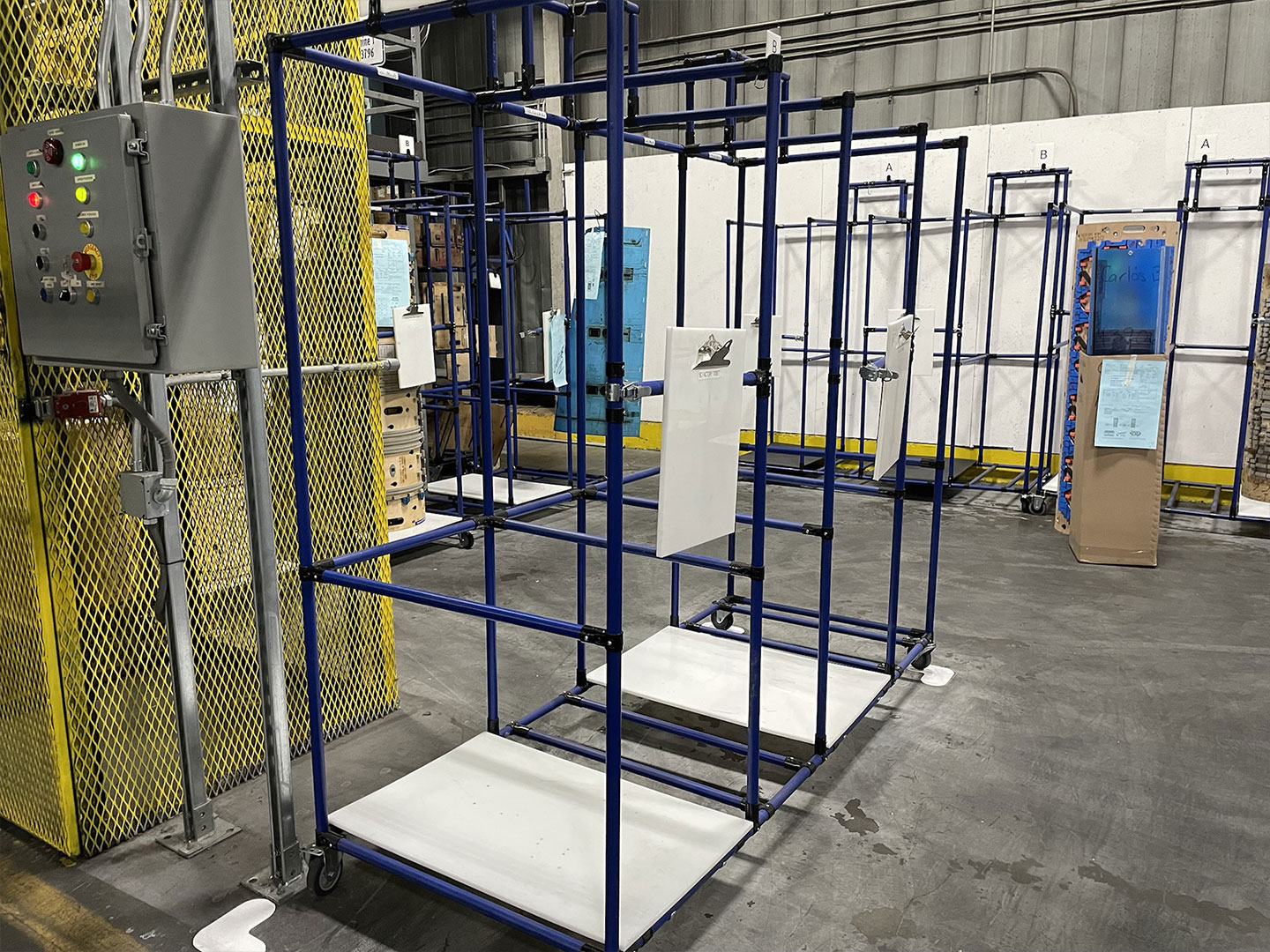
Structure realized by the Continuous improvement team;
Manufacturing operations can become dependent on long-serving employees who know where everything is stored and how each task is completed.
This creates a risk when those employees are absent, change roles or leave the business.
Standardised storage and workplace organisation make knowledge visible. Instead of asking a particular employee where a tool is located, anyone can identify its assigned position.
President Container combined visual workplace improvements with regular audits and Gemba walks. These activities helped management observe work where it happened, speak with employees and identify further opportunities for improvement.
Supporting cultural change over five years
Lean manufacturing requires more than installing racks and tool boards. It requires a workplace culture in which employees are comfortable identifying problems and suggesting solutions.
Over a five-year period, the Flexpipe system supported President Container’s broader continuous improvement efforts. Employees became familiar with modular structures and began submitting requests for new workplace improvements.
Suggestion forms gave employees a practical way to highlight problems. The continuous improvement team could then review the request and create a suitable solution.
As the workplace improved, the number of requests gradually reduced. This was not because employees stopped participating, but because many of the recurring organisational issues had already been addressed.
What encourages employee involvement?
Employees are more likely to participate when:
- Management responds to suggestions
- Improvements solve genuine daily problems
- Results are visible
- Employees can help design the solution
- Structures can be adjusted after testing
- Failed ideas are treated as learning opportunities
When employees see their suggestions turned into useful workplace improvements, continuous improvement becomes part of everyday operations rather than a management-only program.
Reducing the cost of custom structures
Custom welded structures can involve significant cost and time.
The process may require:
- Designing the structure
- Sourcing several materials
- Cutting and welding steel
- Painting or finishing
- Moving the completed unit
- Modifying it if dimensions are incorrect
The final structure may work initially but become unsuitable when production requirements change.
President Container valued the ability to build, dismantle and rebuild modular structures using the same components. This reduced the risk of investing time and money into a fixed solution that could not be altered later.
For Australian manufacturers, modularity can be especially useful where facilities manage short production runs, changing product lines or limited floor space.
A team-based approach to lean implementation
The company did not place responsibility for improvement with one employee or department.
Its sustainability team helped ensure structures remained clean and properly maintained. The project team supported new builds when machinery arrived, while the continuous improvement manager coordinated the overall program.
This collaborative approach created shared responsibility for the workplace.
|
Team |
Continuous improvement role |
|
Production employees |
Identify problems and submit suggestions |
|
Project team |
Build or modify structures |
|
Sustainability team |
Maintain cleanliness and workplace standards |
|
Continuous improvement manager |
Review, prioritise and coordinate improvements |
|
Management |
Provide resources and reinforce the lean culture |
Involving multiple departments also prevents lean manufacturing from becoming dependent on one champion. The approach becomes more sustainable when responsibility is distributed across the organisation.
Responding quickly to everyday problems
A major advantage of a modular system is the ability to respond quickly.
When the company identified that a tool had no suitable storage location, the team did not need to begin a lengthy fabrication process. It could design and assemble an appropriate structure using available components.
This rapid response is central to continuous improvement. Small problems should be addressed before they become accepted as part of the normal process.
A dedicated improvement workshop containing pipes, joints, tools and accessories gave the team the capacity to prototype solutions internally.
Australian manufacturers could adopt a similar approach by creating a small continuous improvement area where employees can test:
- Workstation layouts
- Tool storage
- Bin presentation
- Mobile trolleys
- FIFO lanes
- Ergonomic improvements
Transforming a golf cart into a mobile material-handling solution
One of the company’s most innovative projects involved modifying a flatbed golf cart.
The team built a modular structure on the cart that could transport:
- Tools
- Inks
- Printing plates
- Cutting dies
- Production materials
The mobile structure travelled across a facility covering approximately 525,000 square feet, or about 48,800 square metres.
This solution reduced the time employees spent walking between work areas and helped prevent machinery from sitting idle while waiting for critical tools or materials.
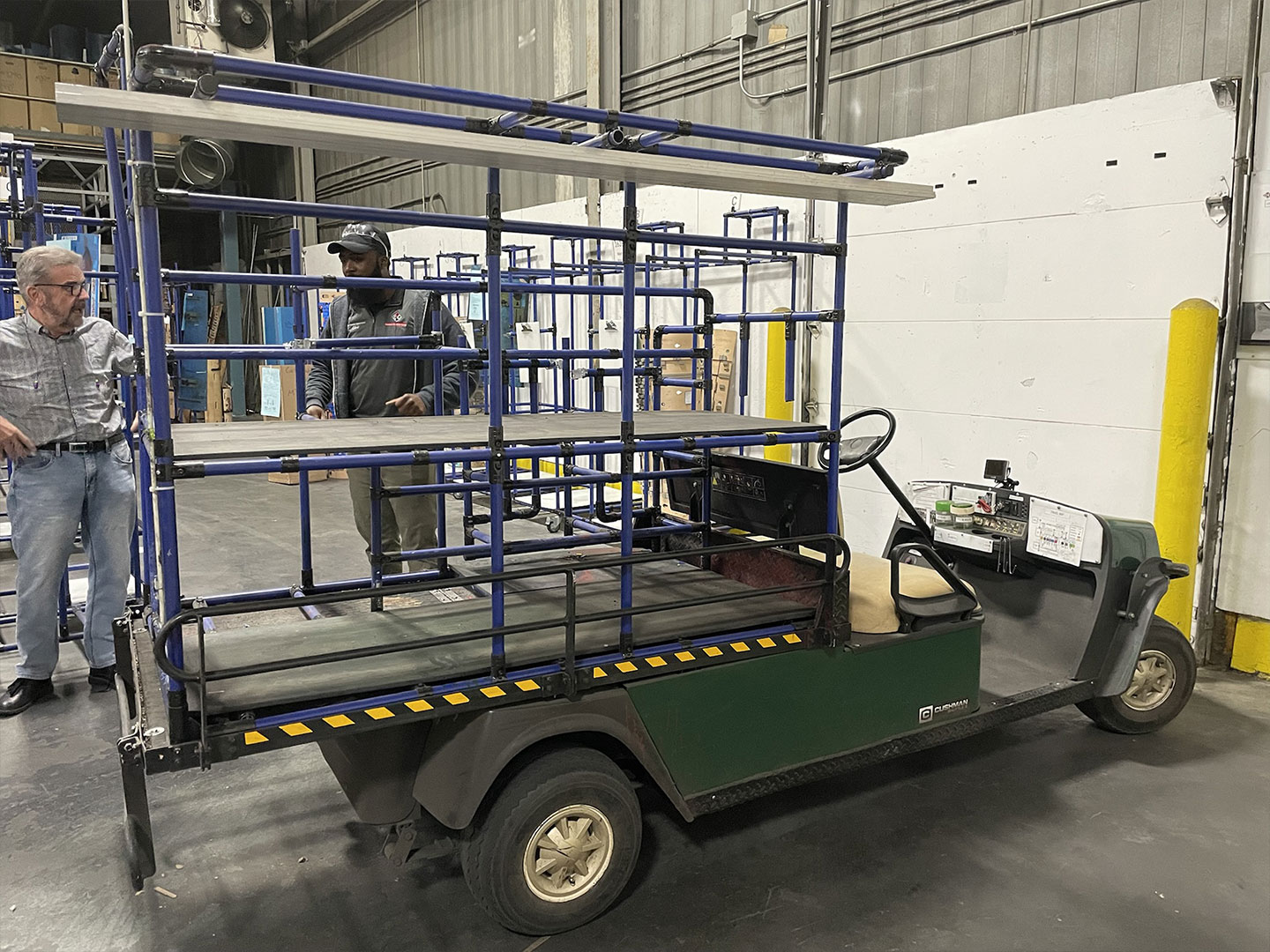
This golf cart was optimized as a transportation waste solution
It addressed one of the key wastes in lean manufacturing: transportation.
Instead of accepting long travel distances as unavoidable, the team created a mobile point-of-use supply solution.
Lean improvements achieved through modular structures
The case study demonstrates how modular material-handling systems can support several lean objectives.
|
Lean objective |
Modular solution |
|
Reduce motion |
Place tools and materials closer to operators |
|
Reduce transportation |
Use mobile trolleys and supply carts |
|
Improve visual management |
Create shadow boards and labelled storage |
|
Improve material flow |
Build FIFO racks and line-side storage |
|
Reduce waiting |
Ensure tools and materials are available |
|
Support standardisation |
Give every item a defined location |
|
Encourage improvement |
Allow employees to test and modify designs |
|
Reduce cost |
Reuse components instead of replacing structures |
Lessons for Australian manufacturers
The main lesson is that lean manufacturing does not always require expensive automation or large infrastructure projects.
Visible, measurable improvements can begin with simple questions:
- How long does it take employees to find a tool?
- How far do operators walk to collect materials?
- Are frequently used items stored at the point of use?
- Can workstations be adjusted for different employees?
- Can a current structure be modified when requirements change?
- Are employees encouraged to report workplace problems?
Addressing these questions can uncover practical opportunities to reduce waste.
How Flexpipe Australia supports lean workplaces
Flexpipe Australia provides modular pipe-and-joint components for building adaptable workplace and material-handling structures.
The system can be used to create:
- Industrial workstations
- FIFO flow racks
- Picking trolleys
- Kitting carts
- Tool boards
- Mobile racks
- Production supply carts
- Custom lean work cells
Because the structures are modular, Australian businesses can adjust dimensions, shelf positions and accessories as their processes evolve.
Explore the Flexpipe Australia free-plan library for design ideas, or contact the team to discuss a custom solution for your manufacturing or warehouse operation.
Frequently Asked Questions
What is a visual workplace in lean manufacturing?
A visual workplace uses labels, colour coding, signs, shadow boards and standard storage locations so employees can quickly understand where items belong and whether something is missing.
How do modular structures support lean manufacturing?
Modular structures can be assembled, tested, modified and reused. This allows manufacturers to improve workplace layouts without investing in permanently welded equipment.
What types of structures can be built with Flexpipe?
Flexpipe can be used for workstations, flow racks, tool boards, picking trolleys, kitting carts, storage racks and custom material-handling systems.
How can visual management reduce wasted time?
Clearly defined storage positions reduce the time employees spend searching for tools, materials and components.
Why are fixed welded structures less flexible?
Welded structures are normally built to fixed dimensions. If product sizes or production requirements change, modifying them can be difficult or costly.
How can employees participate in continuous improvement?
Employees can identify problems, submit suggestions, help design solutions, test prototypes and provide feedback after implementation.
What is a Gemba walk?
A Gemba walk is a workplace observation in which managers visit the actual work area, speak with employees and identify opportunities to improve safety, quality and efficiency.
How can mobile carts reduce manufacturing waste?
Mobile carts bring tools and materials closer to the point of use, reducing unnecessary walking, transportation and equipment waiting time.
Can modular components be reused?
Yes. Flexpipe structures can be dismantled, and many components can be reused in a revised or completely new structure.
Is this approach suitable for Australian SMEs?
Yes. Modular systems can be particularly useful for small and medium-sized manufacturers because improvements can begin with one workstation or rack and expand over time.
Recent Articles