reduce-change-resistance-lean-manufacturing
Introducing lean manufacturing can improve productivity, material flow, workplace organisation and customer service. However, even a well-designed improvement program may struggle when employees are uncertain about the proposed changes.
Resistance does not always mean employees oppose improvement. It can come from fear of job loss, limited understanding, previous failed initiatives or concern that management has not considered the realities of the shop floor.
For Australian manufacturers, the most effective approach is to make employees part of the improvement process. Clear communication, practical training and visible early results can turn hesitant team members into active supporters of lean transformation.
What causes resistance to lean manufacturing?
Employees may resist lean manufacturing when they believe the changes will increase their workload, threaten their roles or replace proven ways of working. Resistance also develops when decisions are made without consulting the people who perform the work every day.
To reduce resistance, leaders should explain why change is required, involve employees in designing solutions and demonstrate that lean is intended to remove waste—not simply reduce headcount.
Quick answer: Resistance to lean manufacturing can be reduced by communicating the purpose clearly, providing practical training, involving employees in decisions, starting with small improvements and recognising both successful experiments and lessons from failure.
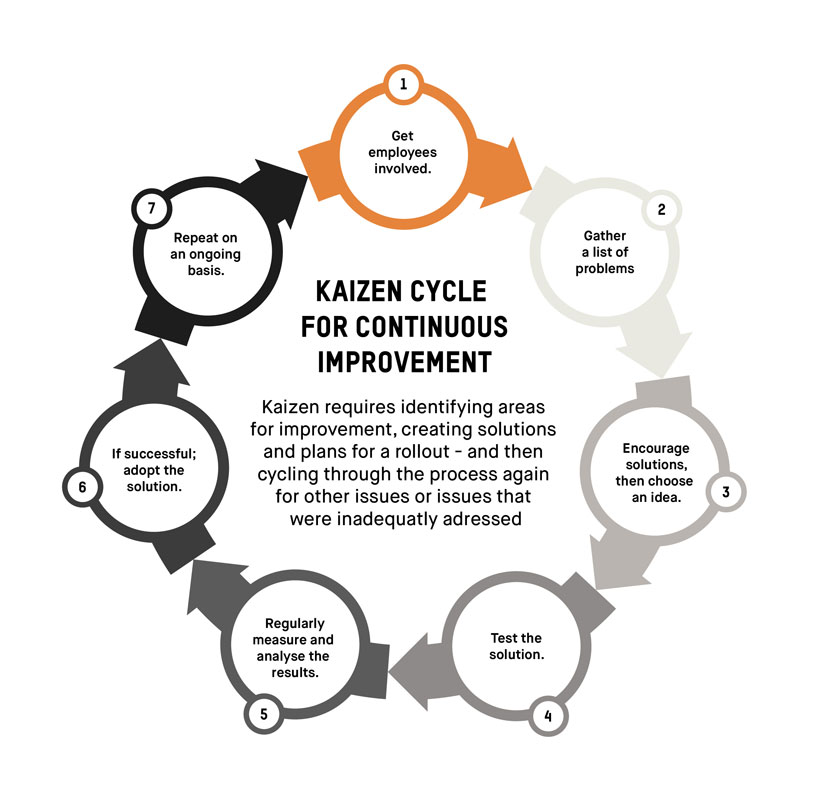
Kaizen Cycle For Continuous Improvement
1. Explain why the change is necessary
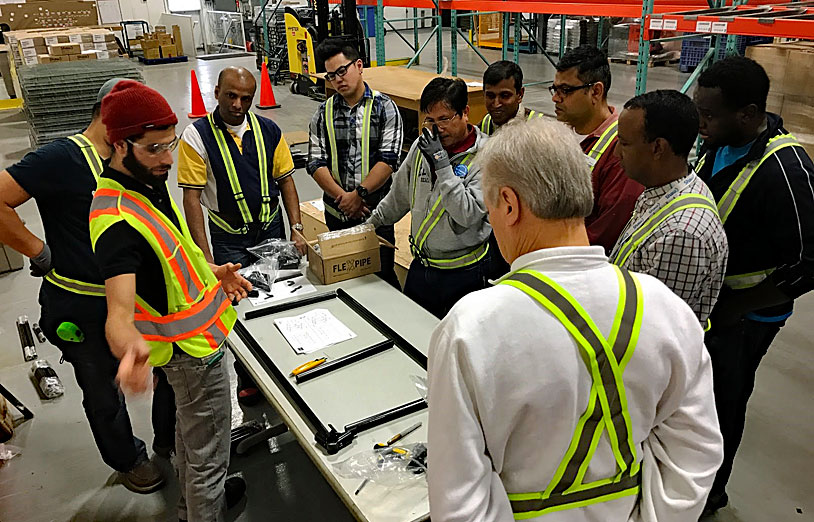
Explain the reasons behind the change
Begin by explaining the business reason for adopting lean manufacturing.
Your goals may include:
- Responding to increased customer demand
- Improving workplace safety
- Reducing production delays
- Improving product quality
- Making workstations easier to use
- Reducing unnecessary movement and handling
- Becoming more competitive in the Australian market
Avoid presenting lean only as a cost-cutting exercise. Employees may interpret that message as a threat to their jobs.
Instead, explain how lean can make work safer, more organised and less frustrating. Connect the proposed improvements to real problems employees already experience.
2. Bring in an experienced lean facilitator
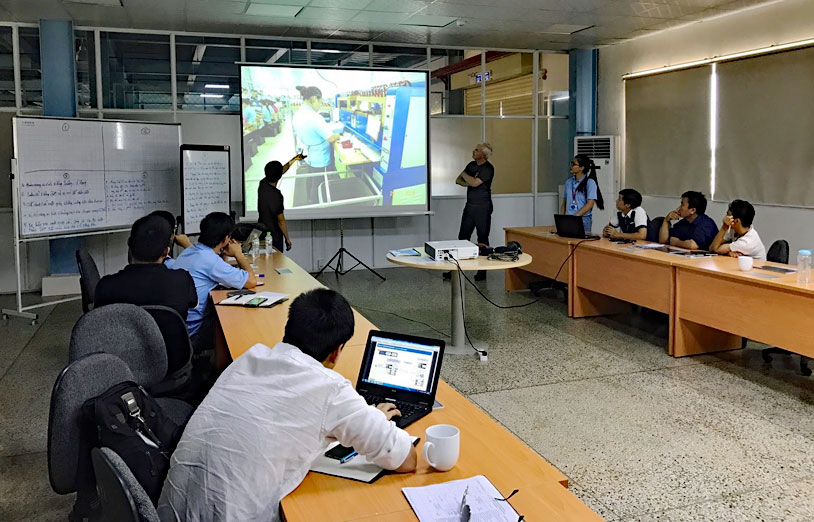
Call upon an external training facilitator
An external lean manufacturing trainer or consultant can bring specialist knowledge and credibility to the program.
A facilitator can introduce lean principles objectively, answer technical questions and share examples from other manufacturing environments. This can be particularly valuable for small and medium-sized Australian manufacturers that do not have an internal lean specialist.
The external trainer should work closely with the person responsible for continuous improvement inside the business. This ensures the training reflects the organisation’s production processes, workforce and operational challenges.
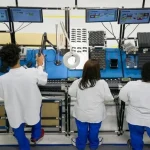
3. Provide basic lean training to everyone
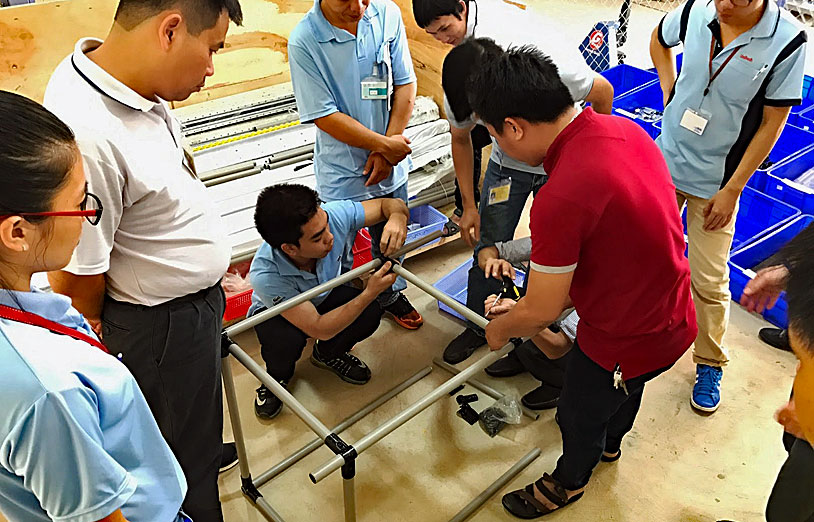
Provide Basic Lean training to all personnel
Employees should understand lean principles before they are expected to apply them.
Introductory training should explain:
- The purpose of lean manufacturing
- Customer value
- Continuous improvement
- The eight manufacturing wastes
- 5S workplace organisation
- Standardised work
- Visual management
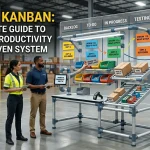
- Pull systems and Kanban
- The role of employees in improvement
Keep the training practical. Use photographs, workplace examples, demonstrations and short videos rather than relying only on presentation slides.
Employees are more likely to support lean when they can see how it applies to their own tasks.
4. Visit other lean manufacturing facilities
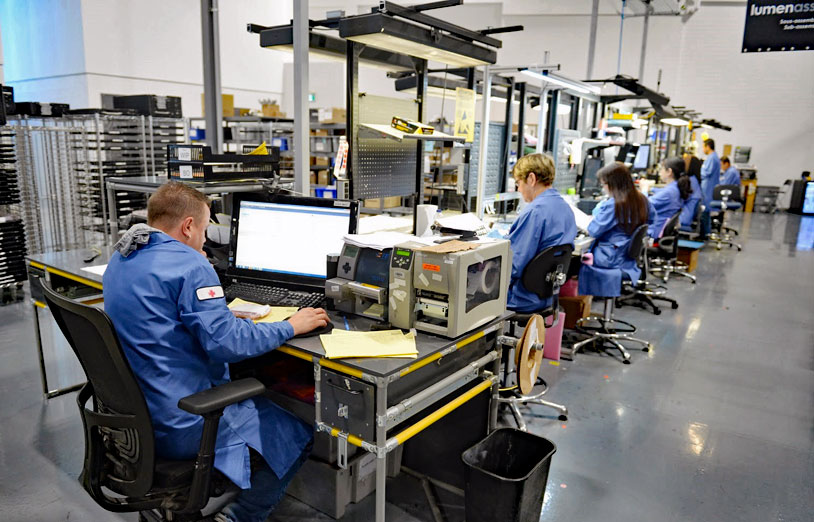
Visit other plants and speak with their employees
Seeing lean manufacturing in practice can be more persuasive than hearing about it in a meeting.
Where possible, arrange a visit to a non-competing Australian manufacturer that has implemented lean systems successfully. Employees can observe organised workstations, visual controls, material flow systems and continuous improvement processes.
More importantly, they can speak directly with employees performing similar work.
Peer-to-peer conversations can address practical concerns such as:
- Whether lean increased workload
- How employees were involved
- What changed on the shop floor
- Which improvements were most useful
- How long the transition took
Employees who attend these visits can become credible internal advocates for the program.
5. Begin with a small, visible improvement
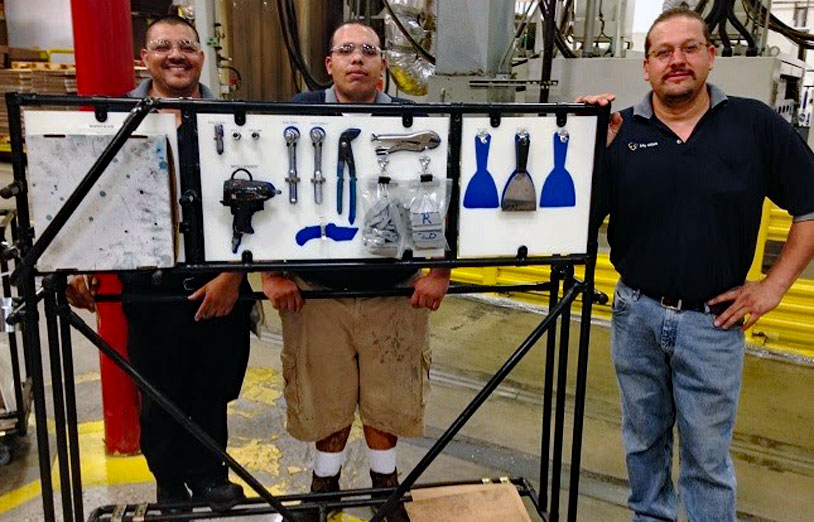
Start with small, simple changes
Do not begin with a complex transformation involving the entire facility.
Select one high-visibility work area and solve a clear operational problem. Suitable early projects might include:
- Improving an uncomfortable workstation
- Organising tools with a shadow board
- Reducing walking between work areas
- Improving component presentation
- Creating a small FIFO flow rack
- Improving access to frequently used materials
Choose a project that can be completed quickly and measured easily.
A successful pilot gives employees direct evidence that lean manufacturing can improve their daily work. It also provides a controlled environment in which the business can learn before expanding the program.
| Pilot project | Possible result |
| Tool shadow board | Less time spent searching for tools |
| Modular workstation redesign | Improved ergonomics and accessibility |
| FIFO flow rack | Better stock rotation and replenishment |
| Point-of-use storage | Reduced operator walking |
| Visual material board | Faster identification of shortages |
6. Ask employees to submit improvement ideas
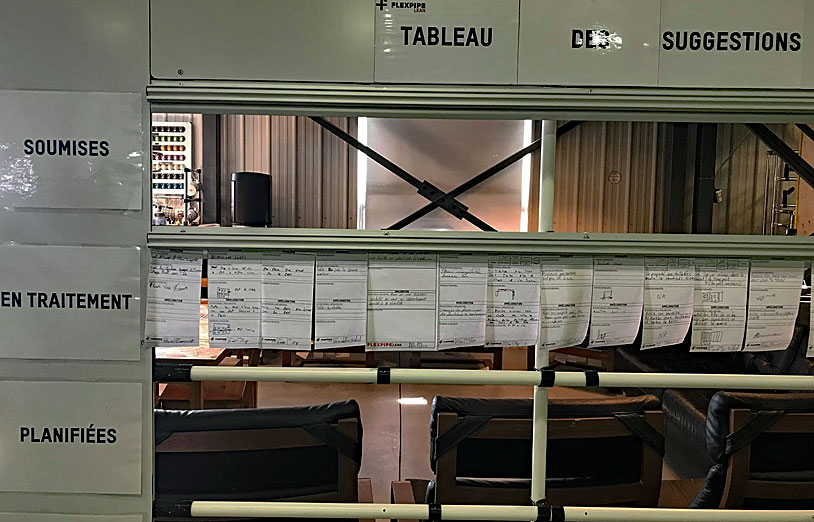
Ask employees to pitch ideas
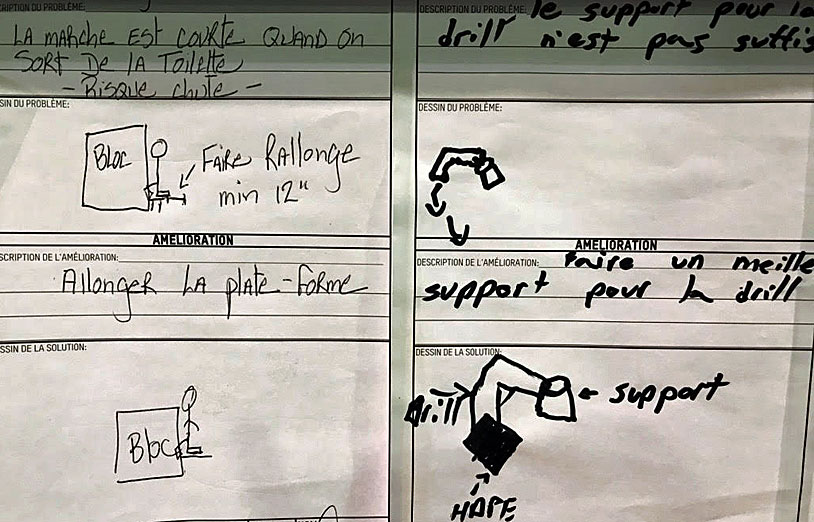
Improvement Submissions with a visual explanation.
The people performing the work often understand production problems better than anyone else.
Invite employees to identify:
- Repetitive movement
- Delays
- Unsafe handling
- Poor workstation layouts
- Difficult-to-reach materials
- Quality risks
- Unnecessary transport
- Tools or components that are frequently misplaced
Ideas can be gathered through a physical improvement board, regular team meeting, digital form or suggestion system.
Management must respond to submissions quickly. A suggestion system will lose credibility when employees contribute ideas but receive no acknowledgement or follow-up.
Even when an idea cannot be implemented, explain why. This demonstrates respect for the employee’s contribution.
7. Let employees help design the solution

Encourage employees to plan the entire project
Employee participation should go beyond identifying problems.
Ask the people who use the process to help design the improved method. They can sketch a new workstation, suggest the position of tools, test material presentation or recommend changes to storage levels.
Supervisors and continuous improvement leaders can help assess:
- Safety
- Ergonomics
- Material capacity
- Workflow
- Cost
- Ease of implementation
- Future flexibility
This collaborative process improves the solution because it combines operational experience with technical guidance.
It also creates ownership. Employees are more likely to support a change they helped create.
8. Involve employees in implementation
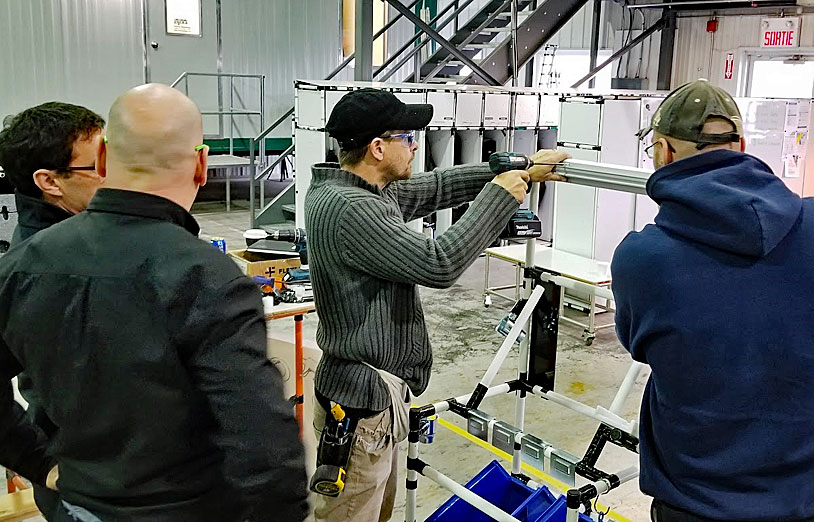
Ask employees to help implement an idea
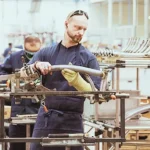
Where practical, allow employees to help build, test and refine the improvement.
For example, operators can participate in building a modular workstation, adjusting a flow rack or positioning point-of-use storage. They can then test the structure using real tools, bins and production materials.
Modular systems are particularly useful during continuous improvement because they can be adjusted after employee feedback. Height, width, shelving position and material presentation can be changed without replacing an entire welded structure.
A small workshop or improvement area containing basic tools and modular components can help employees turn ideas into working prototypes.
9. Recognise progress and learn from setbacks
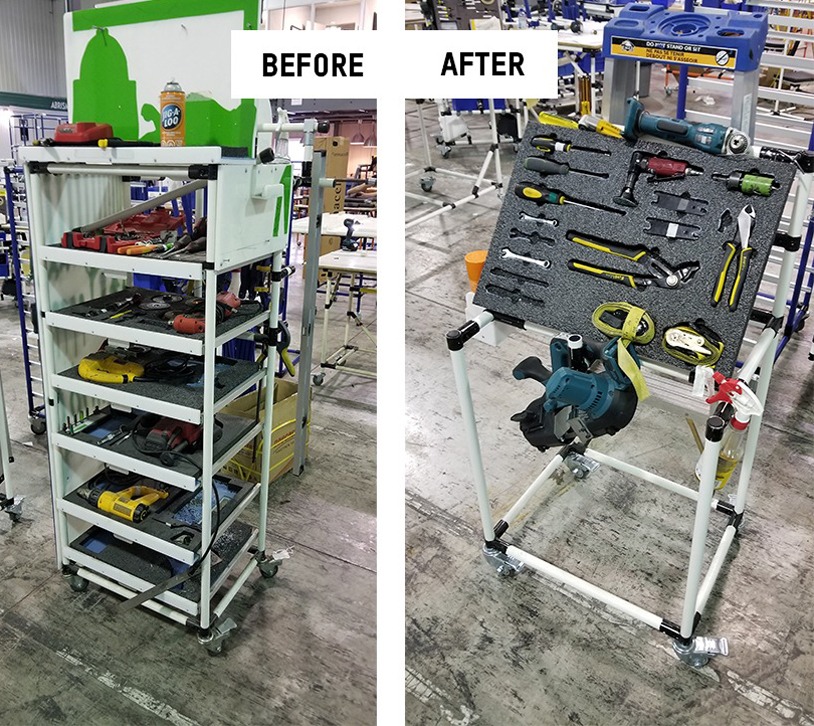
Celebrate the victories—and the defeats—resulting from the change
Lean manufacturing is based on experimentation and continuous improvement. Not every idea will work perfectly the first time.
Recognise employees who contribute ideas, test solutions or help implement improvements. Recognition does not have to be expensive. It may include:
- Mentioning achievements in team meetings
- Displaying before-and-after results
- Providing a certificate
- Sharing the improvement internally
- Offering a small team reward
- Giving employees ownership of the next project
Failures should also be discussed constructively. Focus on what the team learned and how the next version will improve.
Employees will stop experimenting when every unsuccessful trial is treated as a mistake.
10. Recruit people who are open to improvement
Lean culture should also influence recruitment.
During interviews, ask candidates to describe:
- A workplace change they experienced
- How they responded to a new process
- An improvement idea they contributed
- A time they learned a new skill
- How they handled feedback
- How they worked with others to solve a problem
Technical capability remains important, but flexibility, curiosity and collaboration are valuable in a continuous improvement environment.
Recruiting people who are willing to learn helps sustain lean manufacturing beyond the initial implementation.
A practical framework for managing lean change
| Stage | Recommended action | Desired outcome |
| Explain | Communicate why change is needed | Employees understand the purpose |
| Educate | Provide practical lean training | Employees understand key principles |
| Demonstrate | Complete a visible pilot project | Employees see evidence of improvement |
| Involve | Collect and develop employee ideas | Teams gain ownership |
| Implement | Build and test solutions together | Changes reflect real workplace needs |
| Improve | Measure, review and adjust | Continuous improvement becomes routine |
| Recognise | Celebrate contributions and learning | Participation remains strong |
How Flexpipe supports continuous improvement
Flexpipe’s modular pipe-and-joint system allows Australian manufacturers to design and modify workstations, flow racks, picking trolleys, kitting carts, storage racks and other material-handling structures.
Unlike fixed welded structures, modular solutions can be adjusted when production requirements, product dimensions or employee needs change. This gives teams the flexibility to test an idea, gather feedback and improve the design over time.
Employees can also participate directly in designing and building workplace solutions, helping turn continuous improvement from a management program into a practical shop-floor activity.
Explore Flexpipe Australia’s free plans for inspiration, or speak with the team about a custom material-handling solution for your facility.
Frequently Asked Questions
What is resistance to lean manufacturing?
Resistance to lean manufacturing occurs when employees hesitate to adopt new processes, layouts or responsibilities. It may result from poor communication, fear of job loss, limited training or previous unsuccessful change programs.
How can manufacturers reduce employee resistance to change?
Manufacturers can reduce resistance by explaining the purpose of the change, providing training, consulting employees, starting with a small pilot and showing measurable workplace benefits.
Why should shop-floor employees be involved in lean improvement?
Shop-floor employees understand the daily process, including delays, safety concerns and unnecessary movement. Their involvement can produce more practical solutions and increase acceptance of the final change.
Should lean manufacturing begin across the entire factory?
No. It is usually better to begin with one manageable, visible project. The team can test the approach, measure results and apply lessons before expanding it.
What should basic lean training cover?
Training should introduce customer value, continuous improvement, 5S, standardised work, visual management and the eight manufacturing wastes.
How can management encourage improvement ideas?
Management can use suggestion boards, regular improvement meetings or digital forms. Every idea should receive a timely response so employees know their contribution has been considered.
How does modular equipment support lean manufacturing?
Modular equipment can be reconfigured as production requirements change. This supports testing, employee participation and continuous improvement without replacing an entire fixed structure.
What is the role of a lean facilitator?
A facilitator provides training, guides improvement projects and helps employees understand lean principles. An external facilitator can also offer an objective perspective and experience from other workplaces.
How should unsuccessful lean projects be handled?
Review the project without blaming employees. Identify what was learned, adjust the design and test again. Lean manufacturing depends on ongoing experimentation.
How long does it take to build a lean culture?
Lean culture is not created through a single project or training session. It develops gradually as leaders respond to ideas, involve employees, measure improvements and make continuous improvement part of everyday work.
Recent Articles