Custom Storage Racks vs Off-the-Shelf Racking
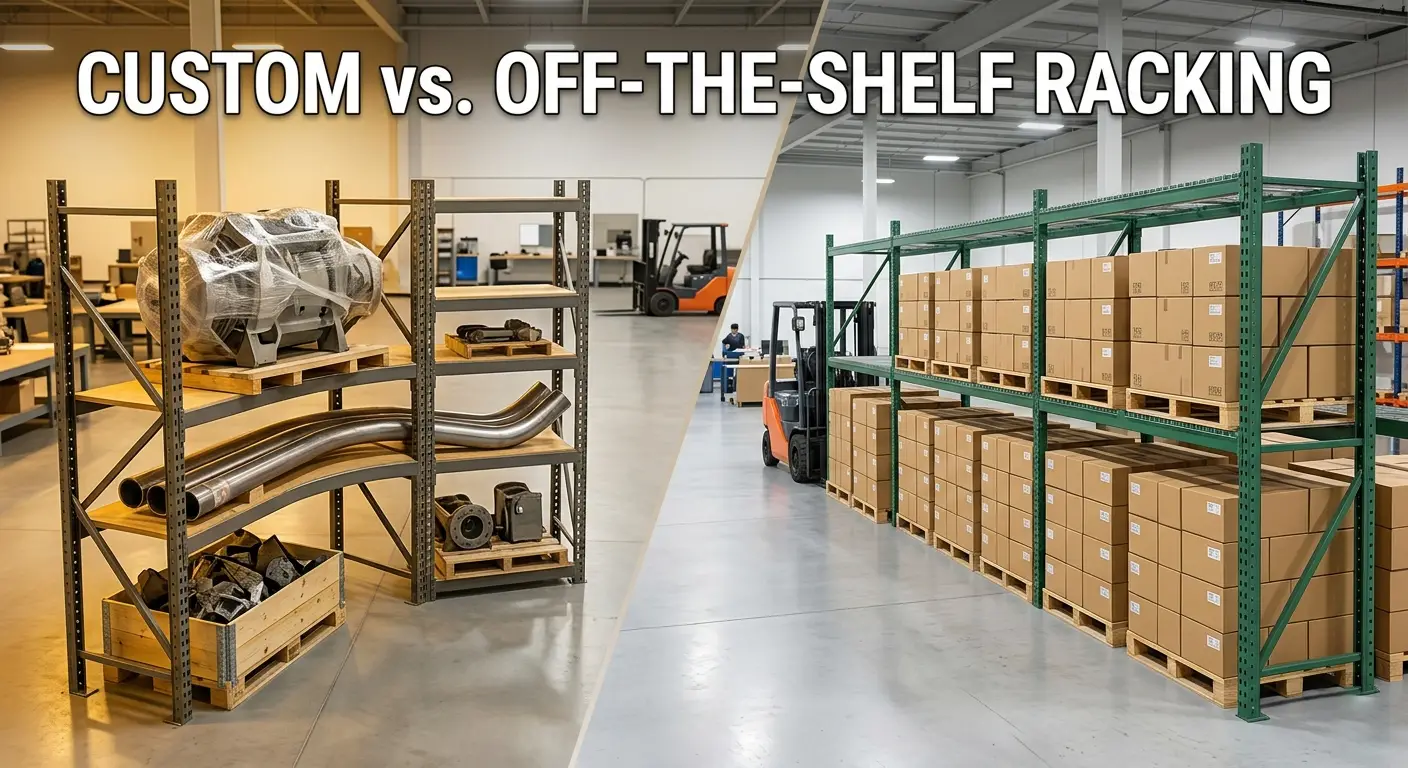
When it comes to organizing your warehouse, shop floor, or production area, the choice between custom storage racks and off-the-shelf racking systems is critical. The ideal solution improves efficiency, maximizes space, and reduces long-term costs.
From basic shelving to advanced systems like Flexpipe Flow Racks, the right storage solution can transform your operations.
This post dives deep into the pros and cons of custom vs standard racking, and explains why Flexpipe’s Flow Racks stand out.
What Are Custom Storage Racks?
Custom storage racks are shelving or racking systems designed specifically for your facility’s unique needs. They are purpose-built based on space, load requirements, workflow, and product types.
Key Features of Custom Racks
- Tailored dimensions
- Specific load capacities
- Unique configurations for product type
- Specialized accessories
- Optimized for space utilization
Who Should Consider Custom Racks?
Custom racks are best for companies with:
- Irregularly sized inventory
- Complex storage requirements
- Limited floor space
- Highly specialized products
What Are Off-the-Shelf Racking Solutions?
Off-the-shelf racking refers to pre-engineered, standardized shelving systems that are ready to install and use with minimal modification.
Common Types Include
- Bolt-together pallet racks
- Wire shelving
- Metal shelving units
- Basic cantilever racks
Advantages
- Quick delivery & installation
- Lower upfront cost
- Standardized quality
- Easy to replace components
Direct Comparison: Custom vs Off-the-Shelf Racks
Here’s a side-by-side look at the most important decision factors:
|
Feature |
Custom Storage Racks |
Off-the-Shelf Racking |
|
Fit to Space |
Excellent |
Limited |
|
Initial Cost |
Higher |
Lower |
|
Lead Time |
Longer |
Shorter |
|
Scalability |
Very High |
Moderate |
|
Flexibility |
Very High |
Limited |
|
Unique Product Support |
Yes |
Only Standard Items |
|
Long-Term Value |
High |
Medium |
Why Standard Racking Falls Short
Off-the-shelf racking is great for general storage needs, but it struggles when:
Your space isn’t square or uniform
Inventory sizes vary widely
Workflow requirements evolve quickly
You need specialized handling (e.g., FIFO, ESD, heavy loads)
Standard racks don’t adapt well. That’s where flexible modular systems shine.
Meet Flexpipe’s Flow Racks
If you want the best of both worlds, custom adaptability with durable, engineered performance, Flexpipe’s Flow Racks deliver.
What Are Flexpipe Flow Racks?
Flexpipe’s Flow Racks are modular, gravity-fed racking systems designed to improve storage and order fulfillment efficiency. They are customizable but use standardized Flexpipe components, allowing easy assembly and reconfiguration.
Top Benefits of Flexpipe Flow Racks
1. Custom Fit Without Custom Cost
Unlike traditional custom racks, Flexpipe Flow Racks:
- Use modular components
- Are reconfigurable
- Avoid expensive custom fabrication
You get a tailored system that adapts as you grow.
2. Enhanced Workflow
Flexpipe Flow Racks use gravity rollers to:
- Automatically feed inventory forward
- Support FIFO (First-In, First-Out) processes
- Increase picking speeds
Great for e-commerce packing lines, assembly stations, and high-turnover SKUs.
3. Improved Space Utilization
With adjustable lanes, widths, and heights, these racks:
- Make better use of vertical space
- Support narrow aisles and tight footprints
- Optimize dense SKU storage
4. Durable Industrial Performance
Built from high-strength aluminum and industrial-grade rollers, Flexpipe Flow Racks hold up in demanding warehouse environments while staying lightweight and easy to work with.
5. Rapid Deployment
Because they’re modular, these racks can be assembled quickly, often without special tools, reducing downtime.
Use Cases: When Flow Racks Make Sense
Flexpipe’s Flow Racks are ideal for:
High-volume pick and pack operations
FIFO inventory rotation
Repetitive assembly workflows
Small parts storage
Lean manufacturing applications
Whether you’re optimizing a small workcell or a large distribution center, flow racks boost accuracy and throughput.
How to Choose the Right Rack for Your Needs
Here’s a simple decision process:
- Assess your storage demands
What size and quantity of items do you store? - Evaluate workflow requirements
Do you need FIFO, gravity feed, or fast picking? - Consider growth and change
Will your needs evolve in months or years? - Balance cost vs ROI
Don’t just look at upfront pricing, consider productivity gains.
If your workflow requires more than generic storage, Flexpipe’s Flow Racks are a strong choice.
Conclusion
Choosing the right racking system impacts your efficiency, safety, and operational cost. Standard off-the-shelf racks are affordable and quick to deploy, but they lack flexibility for changing workflows. Custom racks fit precisely but can be expensive and slow to build.
Flexpipe’s Flow Racks offer a superior balance: modular design that adapts like custom racking, workflow benefits like industrial systems, and a quick return on investment. If you’re ready to upgrade your storage and fulfillment performance, flow racks deserve serious consideration.
Pro Tip: Think beyond upfront cost, measure the ROI from improved picking speeds, reduced labor, and better space utilization. Flexpipe’s Flow Racks often pay for themselves fast.
FAQs
- What’s the real difference between custom and off-the-shelf racking?
Custom racks are built for your exact space and needs. Off-the-shelf racks are standardized and ready to install, but less tailored.
- Are custom racks always better?
Not always. Custom is best when needs are complex. Standard racking works if you have simple, uniform storage requirements.
- Can you modify off-the-shelf racking later?
Some systems allow limited adjustments, but they don’t adapt as easily as modular solutions like Flexpipe.
- Do Flexpipe Flow Racks count as custom or off-the-shelf?
They’re modular like off-the-shelf, but configurable like custom systems, combining advantages of both.
- How do flow racks improve productivity?
By using gravity-fed rollers to keep products moving forward automatically, cutting picking times and errors.
- Is installation difficult?
No. Flexpipe’s systems assemble quickly with common tools and can be reconfigured without replacing parts.
Recent Articles