Flow Rack Implementation Mistakes: 7 Costly Errors and Smart Fixes for Modern Warehouses
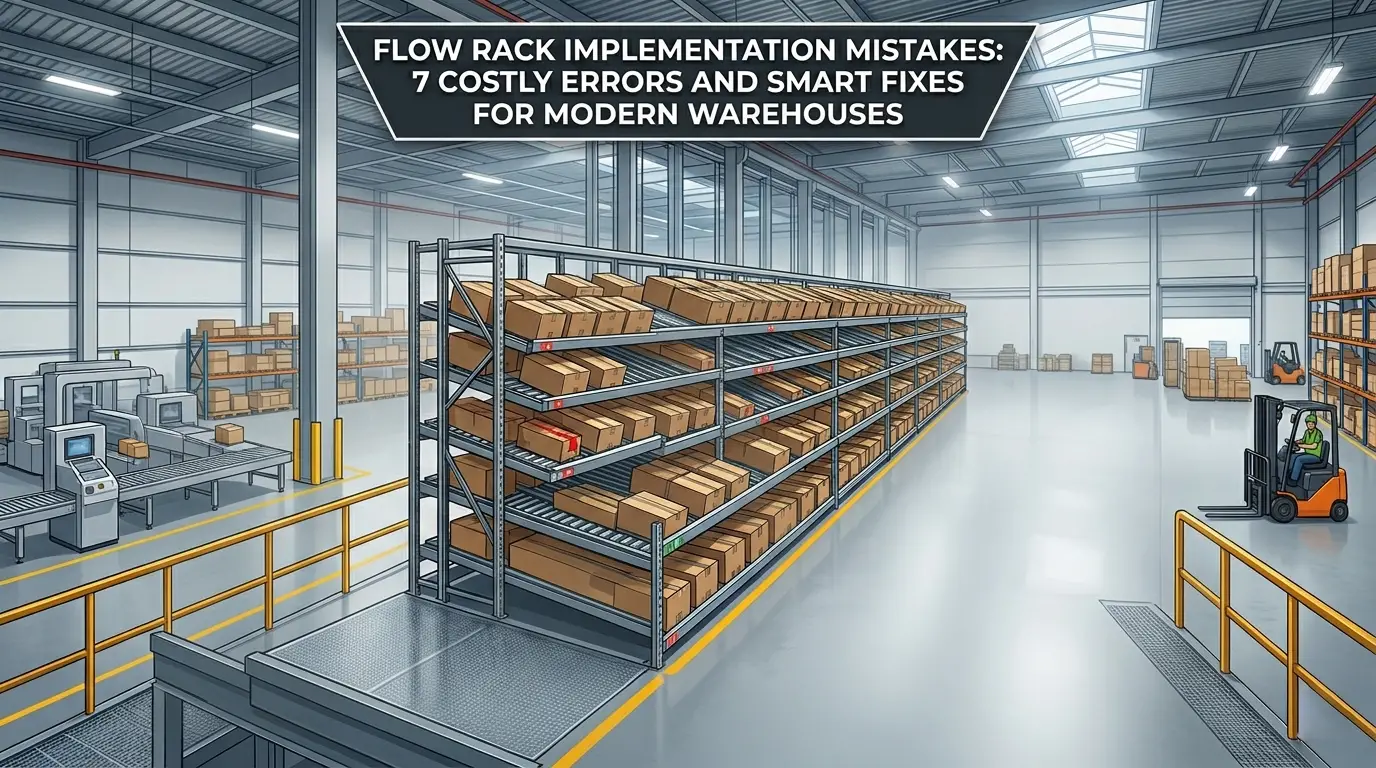
A well-designed flow rack system can significantly increase storage density and streamline operations when implemented correctly. But when mistakes happen during design, installation, or configuration, the result can be slow picking, wasted space, and higher operational costs.
This post explores the most common mistakes companies make when implementing flow racks and how choosing a modular solution, such as Flexpipe Flow Racks, can help warehouses avoid these costly pitfalls.
Understand Flow Rack Systems in Warehouse Operations
Before discussing mistakes, it’s important to understand how flow racks work and why they’re essential for modern warehouses.
What is a Flow Rack System?
A flow rack (also called a gravity flow rack or carton flow rack) is a dynamic storage system that uses rollers or wheels to move products from the loading side to the picking side using gravity.
Key Components of Flow Racks
| Component | Purpose |
| Rollers or wheel tracks | Allow products to move smoothly via gravity |
| Rack frames | Structural support for the system |
| Lane guides | Keep cartons aligned |
| Pick face | Area where workers retrieve products |
Key Benefits of Flow Racks
- Faster order picking
- FIFO inventory rotation
- Higher storage density
- Reduced labor movement
- Improved warehouse organization
However, even with these advantages, poor planning can turn a powerful storage solution into a bottleneck.
Why Flow Rack Implementation Requires Careful Planning
Flow racks may look simple, but they require detailed engineering and layout planning. Incorrect design decisions can cause operational inefficiencies, product jams, and wasted space.
Below are the most common Flow Rack Implementation Mistakes companies make and how to avoid them.
1. Choosing the Wrong Flow Rack Track Style
One of the biggest mistakes is selecting a track style that doesn’t match the product type.
Dedicated Lane Tracks vs Universal Tracks
Flow racks typically use two main track types:
Dedicated Lane Tracks
- Designed for consistent box sizes
- Ideal for uniform SKUs such as retail cartons
Universal Bed Tracks
- Flexible for varying box sizes
- Suitable for operations with frequent SKU changes
Using the wrong track type can lead to inefficient product movement and wasted storage space.
How Flexpipe Helps
Flexpipe’s modular systems allow companies to reconfigure tracks easily, making them ideal for operations with changing product dimensions.
2. Incorrect Track Width Selection
Track width determines how efficiently cartons move through the rack.
Problems Caused by Wrong Track Width
If the track is too wide:
- Products wobble or shift
- Picking becomes slower
If the track is too narrow:
- Cartons jam in the lane
- Product damage increases
Both situations create operational inefficiencies and reduce picking speed.
Solution
Choose adjustable systems like Flexpipe flow racks, which allow operators to modify lane widths when product sizes change.
3. Poor Lane Depth Planning
Lane depth determines how many products can be stored in each lane.
Common Issues
If lanes are too shallow:
- Frequent replenishment
- Increased labor costs
If lanes are too deep:
- Excess inventory storage
- Underutilized space
Incorrect depth planning leads to inventory inefficiencies and higher operational costs.
Best Practice
Design lane depth based on:
- SKU turnover rate
- Demand frequency
- Replenishment schedule
4. Ignoring Proper SKU Spacing
Spacing between cartons is often overlooked but plays a major role in picking efficiency.
Why SKU Spacing Matters
Proper spacing:
- Allows workers to easily grab cartons
- Prevents cartons from sticking together
- Improves flow efficiency
Too little space makes picking difficult, while too much space wastes storage capacity.
Recommended Practice
Maintain around 2 inches of spacing between SKUs to balance accessibility and storage density.
5. Incorrect Rack Beam Sizing
Many warehouses repurpose existing pallet racks when installing flow racks.
While this might save money initially, it often leads to:
- Wasted vertical space
- Reduced storage density
- Inefficient rack layouts
Proper beam sizing ensures that vertical space is used effectively and allows more storage levels to be installed.
6. Poor Warehouse Layout Planning
Even the best flow rack system will fail if the warehouse layout isn’t optimized.
Common layout mistakes include:
- Long pick paths
- Narrow aisles
- Incorrect product placement
These issues create bottlenecks and increase travel time for workers.
Best Layout Strategy
- Place fast-moving SKUs near picking zones
- Design clear material flow paths
- Maintain adequate aisle width
Flexpipe systems support layout flexibility, allowing racks to be repositioned when operational needs change.
7. Lack of Scalability in Flow Rack Design
Many warehouses implement storage systems that cannot adapt as operations grow.
This creates major problems when:
- SKU counts increase
- Automation is introduced
- Order volumes grow
Non-modular rack systems often require expensive redesigns or replacements.
Smart Solution
Use modular storage systems like Flexpipe flow racks that can be expanded, reconfigured, or upgraded as operations evolve.
Why Flexpipe Flow Racks Are a Smart Solution
Flexpipe offers modular, customizable flow rack systems designed for flexibility and efficiency in warehouse environments.
Key Advantages of Flexpipe Flow Racks
- Modular Design
Flexpipe systems use a modular pipe and joint structure that can be easily reconfigured as your operation changes.
- Adjustable Storage Lanes
You can quickly modify lane widths, heights, and rack layouts.
- Faster Installation
Flexpipe racks are easy to assemble, reducing installation time and downtime.
- Improved Ergonomics
Their design supports ergonomic picking positions, reducing worker fatigue.
- Future Scalability
Flexpipe racks grow with your warehouse, making them ideal for expanding operations.
Best Practices for Successful Flow Rack Implementation
To ensure success, follow these implementation guidelines:
Conduct Detailed SKU Analysis
Understand product sizes, weights, and turnover rates before designing racks.
Design for Workflow
Plan racks around picking paths and material flow.
Choose Modular Systems
Flexibility reduces future redesign costs.
Plan for Growth
Always design racks with expansion in mind.
Conclusion
Implementing a flow rack system can dramatically improve warehouse productivity, but only when it’s designed correctly. Many facilities fall into common Flow Rack Implementation Mistakes, such as incorrect track selection, poor lane depth planning, and inefficient layouts.
By choosing modular and flexible solutions like Flexpipe Flow Racks, warehouses can avoid these pitfalls and build a storage system that supports long-term growth, efficiency, and operational success.
In a rapidly evolving logistics industry, investing in the right flow rack design today ensures smoother operations tomorrow.
FAQs
- What are flow racks used for in warehouses?
Flow racks are used for high-density storage and FIFO inventory management, helping improve picking efficiency and space utilization.
- What causes product jams in flow racks?
Product jams usually occur due to incorrect track width, poor spacing, or damaged cartons.
- Are flow racks suitable for all warehouses?
Flow racks work best in warehouses with high-volume order picking and consistent inventory flow.
- How do modular flow racks improve efficiency?
Modular racks allow businesses to adjust layouts, lane widths, and storage levels without replacing the entire system.
- Why should warehouses choose Flexpipe flow racks?
Flexpipe provides customizable, scalable rack solutions that adapt to changing warehouse requirements.
- How do flow racks improve FIFO inventory management?
Gravity-fed racks automatically move products forward, ensuring older inventory is picked first.
Recent Articles