Fulfillment Definition & Steps from Order to Delivery: Proven Strategies for Seamless Logistics Success
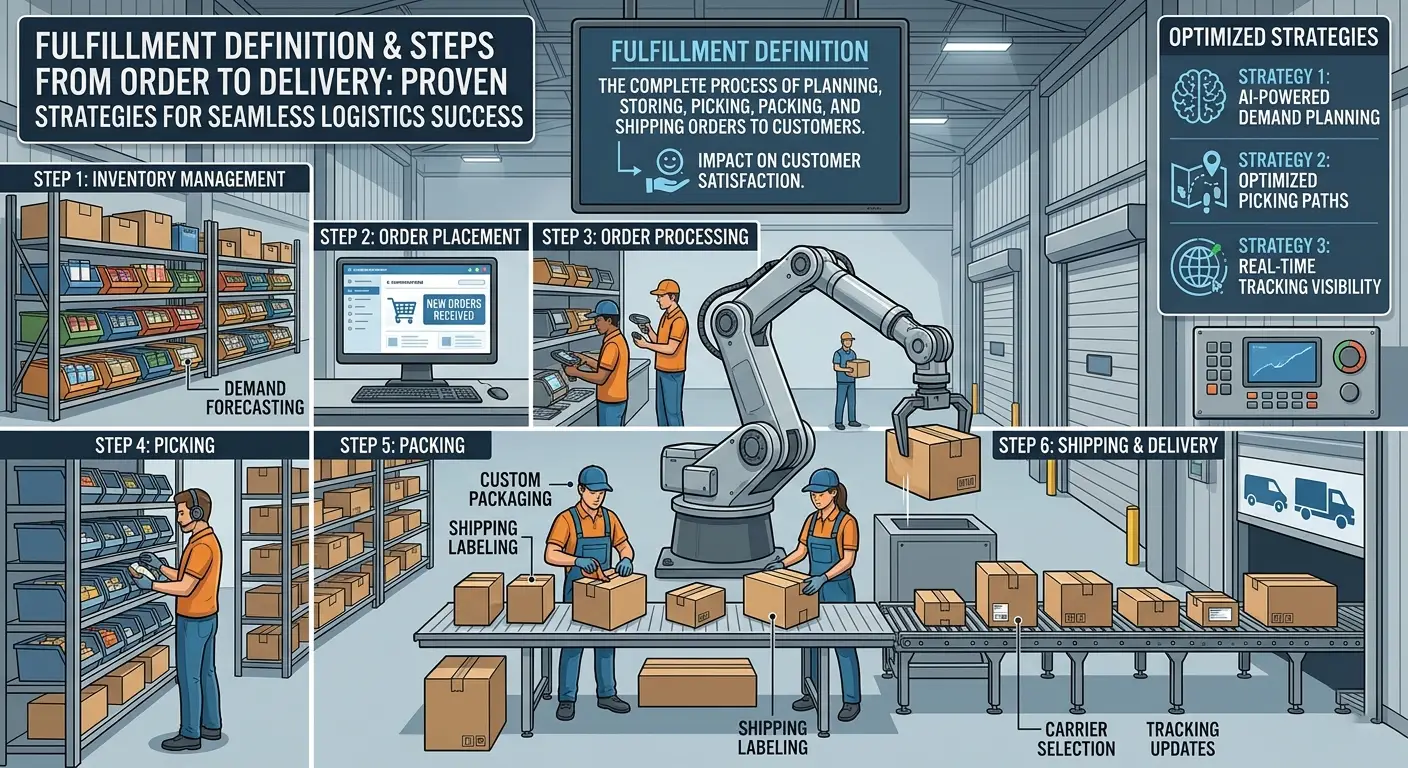
Fulfillment is not just about shipping products; it involves a well-organized system that starts from receiving inventory and ends with delivering products to customers’ doorsteps. When done right, it boosts customer satisfaction, reduces costs, and improves operational efficiency.
What is Fulfillment?
Fulfillment refers to the complete process of receiving, processing, packing, and delivering orders to customers. It also includes handling returns and maintaining inventory accuracy.
Simply put, it’s the journey a product takes from a warehouse shelf to a customer’s hands.
Importance of Fulfillment in E-commerce
A strong fulfillment strategy ensures:
- Faster delivery times
- Accurate order processing
- Lower operational costs
- Better customer experience
Without efficient fulfillment, even the best products can fail in the market.
Key Components of Fulfillment
Inventory Management
Keeping track of stock levels ensures that products are always available when needed.
Order Processing
This includes receiving and verifying customer orders.
Packaging and Handling
Proper packaging protects products and enhances brand image.
Shipping and Delivery
The final step where products reach customers.
Step-by-Step Fulfillment Process
Receiving Inventory
Products arrive at the warehouse and are checked for quality and quantity.
Inventory Storage
Items are stored systematically for easy access.
Role of Warehouse Optimization
Efficient layouts reduce time spent searching for items and improve productivity.
Order Picking
Workers retrieve products from storage based on customer orders.
Types of Picking Methods
- Batch picking
- Zone picking
- Wave picking
Packing Orders
Products are securely packed and labeled for shipping.
Shipping
Orders are handed over to logistics partners for delivery.
Delivery and Returns
Customers receive their orders, and returns are processed if needed.
Common Fulfillment Challenges
Delays and Errors
Late shipments and incorrect orders can harm customer trust.
Inventory Mismanagement
Overstocking or understocking leads to losses.
High Operational Costs
Inefficient systems increase expenses.
How Automation Improves Fulfillment
Warehouse Automation Tools
Automation reduces manual work and speeds up processes.
Benefits of Smart Systems
- Faster order processing
- Reduced errors
- Lower labor costs
Role of Efficient Storage Systems
Introduction to Flow Racks
Flow racks are dynamic storage systems that use gravity to move products efficiently.
Benefits of Flow Rack Systems
- Faster picking times
- Better inventory rotation
- Improved space utilization
Why Choose Flexpipe Flow Racks
When it comes to optimizing fulfillment operations, Flexpipe Flow Racks stand out as a powerful solution.
Key Features
- Modular and customizable design
- Easy installation and scalability
- Durable and cost-effective
Use Cases
- E-commerce warehouses
- Manufacturing units
- Distribution centers
By integrating Flexpipe Flow Racks into your warehouse, you can significantly reduce picking time and improve workflow efficiency, making your fulfillment process smoother and faster.
Best Practices for Efficient Fulfillment
Optimize Warehouse Layout
Design your warehouse for smooth movement and accessibility.
Improve Picking Accuracy
Use barcode systems and automation tools.
Invest in Technology
Adopt software and smart systems to streamline operations.
Future Trends in Fulfillment
AI and Robotics
Automation will continue to transform warehouses.
Sustainable Logistics
Eco-friendly packaging and green delivery methods are gaining importance.
Conclusion
Understanding Fulfillment is essential for any business aiming to succeed in today’s competitive market. From inventory management to final delivery, every step plays a crucial role in ensuring customer satisfaction.
By adopting modern solutions like automation and Flexpipe Flow Racks, businesses can streamline operations, reduce costs, and deliver exceptional service. In a world where speed and accuracy matter, investing in efficient fulfillment systems is no longer optional, it’s a necessity.
FAQs
- What is fulfillment in simple terms?
Fulfillment is the process of delivering products from a warehouse to customers.
- Why is fulfillment important?
It ensures timely delivery and customer satisfaction.
- What are the main steps in fulfillment?
Receiving, storing, picking, packing, shipping, and delivering.
- How can businesses improve fulfillment efficiency?
By using automation, optimizing layouts, and adopting smart storage systems.
- What are flow racks used for?
They help organize inventory and speed up order picking.
- Why choose Flexpipe Flow Racks?
They are flexible, efficient, and improve warehouse productivity.
Recent Articles