Introduction: Lean Thinking in Modern Manufacturing

Lean manufacturing isn’t just a buzzword; it’s a proven method that helps businesses stay competitive, reduce costs, and increase output. But how can lean manufacturing help a company in real terms?
At its heart, lean is about maximizing value for the customer while minimizing waste. Companies of all sizes, especially in competitive industries, can benefit immensely from lean practices. The bonus? Lean manufacturing can be enhanced significantly with the right tools, like Flexpipe’s Modular System.
The Core Principles of Lean Manufacturing
-
Value
Define what truly matters to the customer and deliver that value without unnecessary extras.
-
Value Stream
Map every step in the process to identify and remove non-value-adding actions.
-
Flow
Ensure a smooth process without interruptions, delays, or bottlenecks.
-
Pull
Produce only what’s needed, when it’s needed, preventing overproduction.
-
Perfection
Continuously refine processes through Kaizen (continuous improvement) to achieve operational excellence.
How Can Lean Manufacturing Help a Company?
Here’s how lean creates real change in business operations:
-
Increased Efficiency
Lean systems eliminate redundancies, enabling faster and smoother workflows.
-
Waste Elimination
From excess inventory to waiting time, lean targets and removes all types of waste.
-
Cost Reduction
Lower waste and improved efficiency translate directly into cost savings.
-
Enhanced Product Quality
By simplifying and refining processes, product defects decrease and consistency improves.
-
Improved Employee Morale
Workers enjoy a safer, more organized environment with clearer roles and responsibilities.
-
Flexibility in Operations
Lean allows companies to adapt quickly to changing customer demands or market trends.
Real-World Benefits of Lean Manufacturing
Lean practices lead to:
- Competitive advantage: Deliver more value faster than competitors.
- Faster time-to-market: Streamlined workflows mean quicker delivery.
- Greater customer satisfaction: Products are delivered on time, with quality and consistency.
Common Challenges Companies Face When Implementing Lean
Despite its benefits, lean implementation isn’t always smooth:
- Resistance to change from employees or management.
- Upfront investments in new systems or training.
- Cultural transformation takes time and persistent leadership.
The Role of Modular Systems in Lean Manufacturing
-
What Are Modular Systems?
Modular systems use interchangeable parts (usually aluminum pipes and joints) to build carts, racks, and workstations.
-
Benefits in Lean Context
They support 5S, quick layout changes, visual management, and more, empowering your lean journey with flexibility and speed.
Why Flexpipe’s Modular System Stands Out
Flexpipe is more than a modular tool; it’s a lean manufacturing enabler.
-
Adaptability and Customization
Quickly build, adjust, and rebuild racks and stations to fit your process changes.
-
Built for Continuous Improvement
The system aligns with Kaizen, Value Stream Mapping, and cellular manufacturing needs.
-
Easy Integration
It’s designed for non-engineers. You can assemble structures in hours, not days.
Integrating Flexpipe into Your Lean Strategy
- Start small with a single workstation.
- Map your workflow and identify bottlenecks.
- Train your team to build and adjust Flexpipe solutions as needed.
Lean Tools and Flexpipe Compatibility
| Lean Tool | Flexpipe Compatibility |
|---|---|
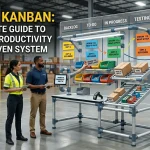
| Kanban | Custom racks for FIFO systems |
| 5S | Visual boards, shadow tools, clean layouts |
| Andon & Poka-Yoke | Visual displays and mistake-proofed work cells |
Flexpipe vs Traditional Fabrication Methods
| Feature | Flexpipe | Welding or Steel Frames |
|---|---|---|
| Setup Time | Hours | Days |
| Modifiability | High | Low |
| Cost Efficiency | Long-term savings | High upfront + long mod time |
Environmental and Sustainability Advantages
Flexpipe’s reusability aligns with sustainability goals:
- Less material waste.
- Modular components reused across projects.
- Reduces the need for constant fabrication and disposal.
Environmental Considerations for Aluminum Fasteners
Flexpipe is trusted across industries for lean implementations:
- Automotive: Kitting carts, flow racks, parts feeding.
- Aerospace: Tool shadow boards, mobile stations.
- Electronics: ESD-safe workbenches, modular racks.
- Packaging: Custom carts for box handling and packing lines.
Conclusion
So, how can lean manufacturing help a company? In every way possible, from efficiency to flexibility, from morale to market competitiveness. When paired with a smart tool like Flexpipe’s Modular System, lean becomes more than just a philosophy; it becomes a practical, visual, and repeatable reality.
Whether you’re a lean beginner or a continuous improvement expert, Flexpipe empowers your journey to operational excellence. It’s time to think lean. Think modular. Think Flexpipe.
FAQs
- 1. How can lean manufacturing help a company save money?
By reducing waste and improving efficiency, lean cuts costs on labor, materials, and time. - 2. Is Flexpipe suitable for small businesses?
Absolutely. Flexpipe is scalable and perfect for both startups and large manufacturers. - 3. What makes modular systems better than traditional setups?
Modular systems offer speed, flexibility, and reusability without needing welding or fabrication skills. - 4. Can Flexpipe support automated systems?
Yes, Flexpipe integrates with sensors, conveyors, and other automation tools. - 5. Do employees need training to use Flexpipe?
Minimal training is needed. Teams can learn to assemble and adjust systems quickly. - 6. How long does it take to implement Flexpipe?
Most teams can set up and adjust Flexpipe structures within a few hours to a couple of days.
Recent Articles