
How Many Casters Do You Need? A Complete Guide to Choosing the Right Caster Wheels
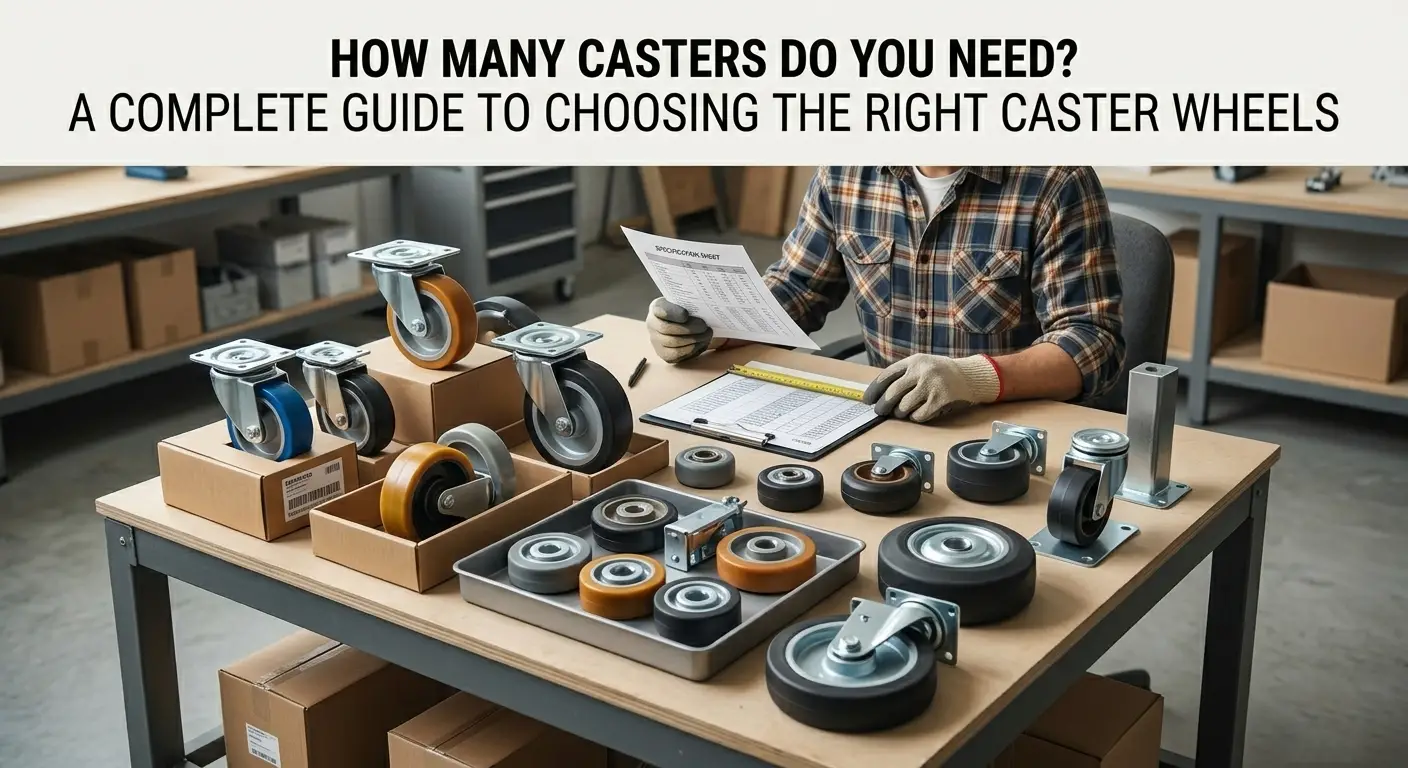
When building carts, racks, or mobile workstations, one of the most common questions is: “How many casters do I need?” Getting the number right is essential, not only for mobility but also for safety, durability, and efficiency. The wrong setup could mean poor stability, difficulty moving equipment, or even damage to your floor.
In this post, we’ll explore how to determine the right number of casters, review standard configurations, and explain why Flexpipe’s caster wheel system is the ultimate solution for any project.
Why Choosing the Right Number of Casters Matters
Casters aren’t just small wheels attached to your equipment; they’re the foundation of smooth movement and reliable support. Whether you’re moving a lightweight workstation or a heavy industrial cart, the number and type of casters you choose will directly impact safety and usability.
Understanding the Role of Casters
What Are Casters and How Do They Work?
Casters are wheel assemblies that allow objects to roll across surfaces with ease. They typically consist of a wheel, a mount, and sometimes a swivel mechanism. By reducing friction, casters make it possible to move heavy loads without excessive force.
Common Uses of Casters in Industrial and DIY Projects
- Workstations – For flexible assembly lines.
- Carts and Racks – To move materials quickly.
- DIY Furniture – Adding mobility to custom builds.
- Medical & Lab Equipment – Where precision and mobility matter.
Factors That Determine How Many Casters You Need
Several elements come into play when deciding caster quantity:
Load Capacity and Weight Distribution
Each caster has a weight rating. To prevent failure, divide your total load weight by the number of casters, then add a safety margin.
Size and Shape of the Platform
Larger surfaces may require additional casters to distribute weight evenly and prevent sagging in the middle.
Stability vs. Maneuverability
- Fewer casters = Easier turning, less stability.
- More casters = Greater stability, but harder to maneuver.
Floor Conditions and Environment
Uneven floors may require extra casters for balance, while smooth surfaces work well with standard setups.
Standard Caster Configurations Explained
The 4-Caster Setup: The Most Common Choice
- 2 fixed + 2 swivel casters = balance of mobility and control.
- Works well for most carts, racks, and workstations.
The 3-Caster Setup: When to Use It
- Used for lighter loads and compact designs.
- Not recommended for heavy-duty applications due to reduced stability.
The 6-Caster Setup: Heavy-Duty Applications
- Ideal for long platforms or heavy loads.
- Prevents sagging and distributes weight more evenly.
Special Configurations for Custom Projects
Some projects may require 5 or even 8 casters, especially when dealing with oversized surfaces.
How to Calculate the Right Number of Casters
Step 1: Measure Total Weight
Calculate the maximum load, including equipment, materials, and the cart itself.
Step 2: Divide Weight by Number of Casters
For example, if your load is 600 lbs and you plan to use 4 casters, each caster must handle 150 lbs minimum.
Step 3: Add a Safety Margin
Always add 25–30% extra capacity to account for uneven weight distribution.
Why Flexpipe’s Caster Wheels System is the Best Choice
Flexibility and Easy Installation
Flexpipe offers plug-and-play caster wheels designed to fit modular structures effortlessly. No complicated tools required.
Durable Design and Smooth Mobility
Made from high-quality materials, Flexpipe casters are built to withstand industrial conditions while ensuring smooth, quiet movement.
Wide Variety of Options for Any Project
Whether you need swivel, fixed, or brake casters, Flexpipe provides versatile options tailored for different weight capacities and environments.
Real-World Examples of Flexpipe Casters in Action
Industrial Workstations
Easily move assembly stations between production lines.
Modular Carts and Racks
Reconfigure layouts quickly without heavy lifting.
Custom DIY Projects
From mobile shelves to rolling tool benches, Flexpipe casters bring flexibility to personal projects.
Conclusion
So, how many casters do you need? The answer depends on weight, platform size, and stability requirements. For most projects, 4 casters will do the job. But if you’re handling heavier loads or large surfaces, go with 6 or more.
When in doubt, choose Flexpipe’s caster wheel system, designed for strength, flexibility, and smooth performance in any environment.
FAQs
- How many casters do you need for a workbench?
Most workbenches require 4 casters, but heavier benches may need 6 for added stability.
- Can you mix swivel and fixed casters?
Yes! A common setup is 2 swivel + 2 fixed, providing both stability and steering control.
- What happens if you overload casters?
Overloading leads to caster failure, poor mobility, and safety hazards. Always calculate capacity correctly.
- Are bigger casters always better?
Not necessarily. While larger casters roll smoothly on rough floors, they aren’t always required for light-duty projects.
- Should you use brakes on casters?
Yes, brakes prevent movement during work, ensuring safety and stability.
- Where can you buy high-quality casters?
Flexpipe offers durable, versatile, and easy-to-install caster systems designed for both industrial and DIY applications.
Recent Articles



Shop caster wheels
Flexpipe supplies a full range of caster wheels in Australia — swivel, rigid, stem and plate casters, heavy-duty and braked options, in a range of load capacities. Delivered Australia-wide.