
How to Install Casters with Stem: The Ultimate Step-by-Step Guide
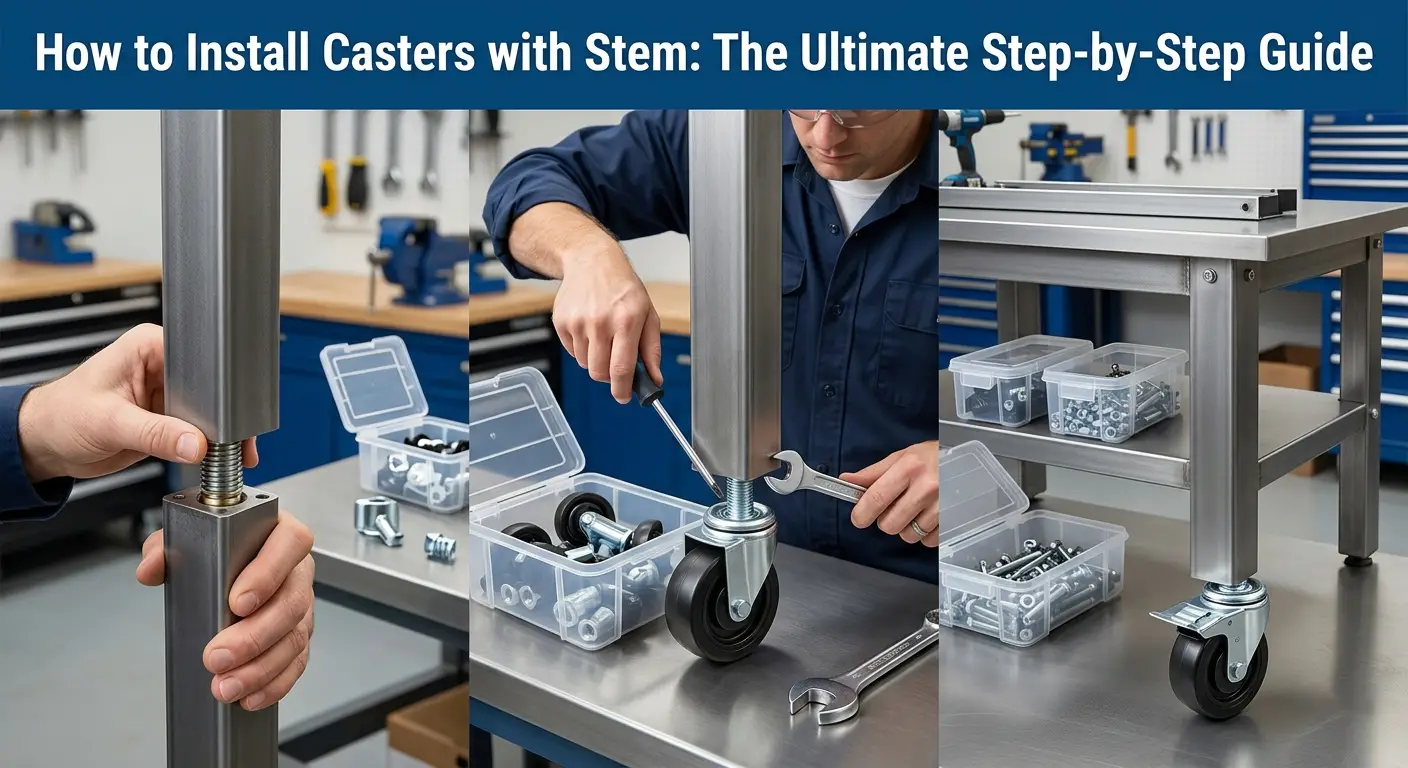
Installing casters may seem like a small upgrade, but it can completely transform how easily you move furniture, carts, flow racks, workstations, and industrial material-handling structures. If you’re wondering how to install casters with a stem, you’re in the right place. This post walks you through every step, from choosing the right caster wheels to installing, securing, and testing them properly.
And throughout this post, we’ll also highlight why Flexpipe’s Caster Wheels are among the most trusted options for heavy-duty industrial and modular applications.
Understanding Casters with a Stem
Casters with stems are incredibly popular because they’re easy to install, widely compatible, and available in multiple formats. The stem is simply the vertical metal or plastic rod that inserts directly into your equipment’s mounting socket.
Types of Stem Casters
Stem casters come in different configurations, including:
-
Grip Ring Stem Casters – Common for office chairs and carts
-
Threaded Stem Casters – Used when a secure, screw-in connection is needed
-
Hollow Kingpin Casters – Allows you to insert a bolt through the stem
Each type works well as long as you choose the right stem size for your equipment.
Benefits of Using Stem Casters
Stem casters help you:
-
Move objects smoothly with minimal effort
-
Improve workplace ergonomics
-
Increase efficiency in industrial environments
-
Customize mobility for modular structures
Why Choose Flexpipe Caster Wheels
Flexpipe is well-known in the modular manufacturing world for building high-quality, customizable, and durable industrial components. The caster wheels are no exception.
Flexpipe Quality & Durability Features
Flexpipe casters are built for industrial use and provide benefits such as:
-
High load capacity
-
Reinforced steel frames
-
Precision ball bearings
-
Quiet, smooth rolling
-
Brake-equipped options for additional safety
-
Compatibility with modular pipe and joint systems
These features ensure long-lasting mobility whether you’re assembling carts, racks, conveyors, or workstations.
Tools & Materials Needed Before Installation
Before you begin learning how to install casters with a stem, gather these items:
-
New casters (preferably Flexpipe casters)
-
Wrench or pliers
-
Rubber mallet
-
Measuring tape
-
Wood block for safe tapping
-
Lubricant (optional)
Measuring Your Stem & Mounting Compatibility
Accurate measurements ensure a secure fit. Measure:
-
The stem diameter
-
The stem length
-
The depth of your mounting socket
If unsure, compare your existing caster’s stem with the new one.
Step-by-Step Guide to Install Casters with Stem
Below you’ll find the exact process for installing stem casters.
Follow each step carefully for the best results.
Step 1 – Prepare Your Work Surface
Clear your workspace and flip the furniture or equipment carefully. Avoid placing weight on the mounting sockets.
Step 2 – Remove Old Casters (If Any)
Grip the caster firmly and pull downward. Use pliers if it’s stuck. For threaded stems, unscrew carefully.
Step 3 – Insert the Stem into the Mounting Socket
Align the stem directly above the socket and push straight downward. Use gentle pressure.
For tight fits, use a rubber mallet and a wood block to tap lightly until the stem is fully seated.
Step 4 – Secure the Caster in Place
Make sure:
-
Grip rings fully expand
-
Threads are tightened
-
Kingpins are aligned correctly
The caster should not wobble.
Step 5 – Test and Adjust the Mobility
Once all casters are installed, flip the item upright and test:
-
Swivel range
-
Rolling smoothness
-
Brake functionality (if included)
Common Mistakes to Avoid When Installing Stem Casters
-
Choosing the wrong stem size
-
Not inserting the stem fully
-
Over-tightening threaded casters
-
Using casters with insufficient load capacity
-
Mixing caster types on one frame
Avoiding these issues ensures maximum stability and user safety.
Maintenance Tips for Long-Lasting Caster Performance
To extend the lifespan of your stem casters:
-
Apply a light lubricant to the bearings
-
Tighten loose components regularly
-
Keep wheels clean from dirt or debris
-
Replace broken casters immediately
-
Choose high-quality brands like Flexpipe
Troubleshooting Stem Caster Installation Issues
| Problem | Cause | Solution |
|---|---|---|
| Wobbling | Loose fit | Recheck stem size |
| Squeaking | Dry bearings | Add lubrication |
| Hard to push | Low-quality wheels | Upgrade to Flexpipe casters |
| Misalignment | Improper installation | Remove & reinstall correctly |
Conclusion
Learning the best ways to install casters with a stem is simple once you know the proper steps. With the right tools, accurate measurements, and high-quality caster wheels, you can upgrade any furniture or industrial structure for smoother mobility. When reliability and durability matter, Flexpipe’s Caster Wheels stand out as a trusted solution for factories, workshops, warehouses, and modular systems.
FAQs
1. How do you know which size stem caster fits your equipment?
Measure the diameter and length of your current caster stem or check the manufacturer’s specifications.
2. Are stem casters strong enough for heavy-duty applications?
Yes, especially industrial-grade options like Flexpipe casters.
3. Can you mix different caster types on the same unit?
It’s not recommended, as it may affect stability and maneuverability.
4. What’s the difference between a threaded stem and a grip ring stem?
Threaded stems screw in; grip ring stems press-fit into the socket.
5. Should you lubricate your casters?
Yes, periodic lubrication keeps them rolling smoothly.
6. Do Flexpipe casters come with brakes?
Yes, Flexpipe offers brake-equipped caster options for added safety.
Recent Articles



Shop caster wheels
Flexpipe supplies a full range of caster wheels in Australia — swivel, rigid, stem and plate casters, heavy-duty and braked options, in a range of load capacities. Delivered Australia-wide.