Foundation of Lean Manufacturing: Storage Systems and Organization
What is Lean Manufacturing?
Lean manufacturing is a systematic approach focused on eliminating waste while maximizing productivity. Originally developed by companies like Toyota, this methodology aims to deliver value to customers with minimal resources. It’s not just about cutting costs, it’s about creating smarter, more efficient processes.
Importance of Organized Storage in Lean Environments
Storage systems play a crucial role in lean environments. Without proper organization, even the most optimized production line can suffer delays, confusion, and inefficiencies. A well-structured storage system ensures materials are easily accessible, reduces unnecessary movement, and supports a smooth workflow.
Core Principles of Storage Systems in Lean Manufacturing
Minimizing Waste Through Smart Storage
Waste in manufacturing can take many forms, such as excess inventory, unnecessary motion, or waiting time. Efficient storage systems help reduce these wastes by ensuring materials are stored logically and accessed quickly.
Enhancing Workflow Efficiency
When storage is aligned with workflow, employees spend less time searching for materials and more time adding value. This directly improves productivity and reduces operational bottlenecks.
Visual Management and Accessibility
Clear labeling, color coding, and visible inventory levels make it easier for workers to understand stock status at a glance. This aligns perfectly with lean principles of transparency and simplicity.
Types of Storage Systems Used in Lean Manufacturing
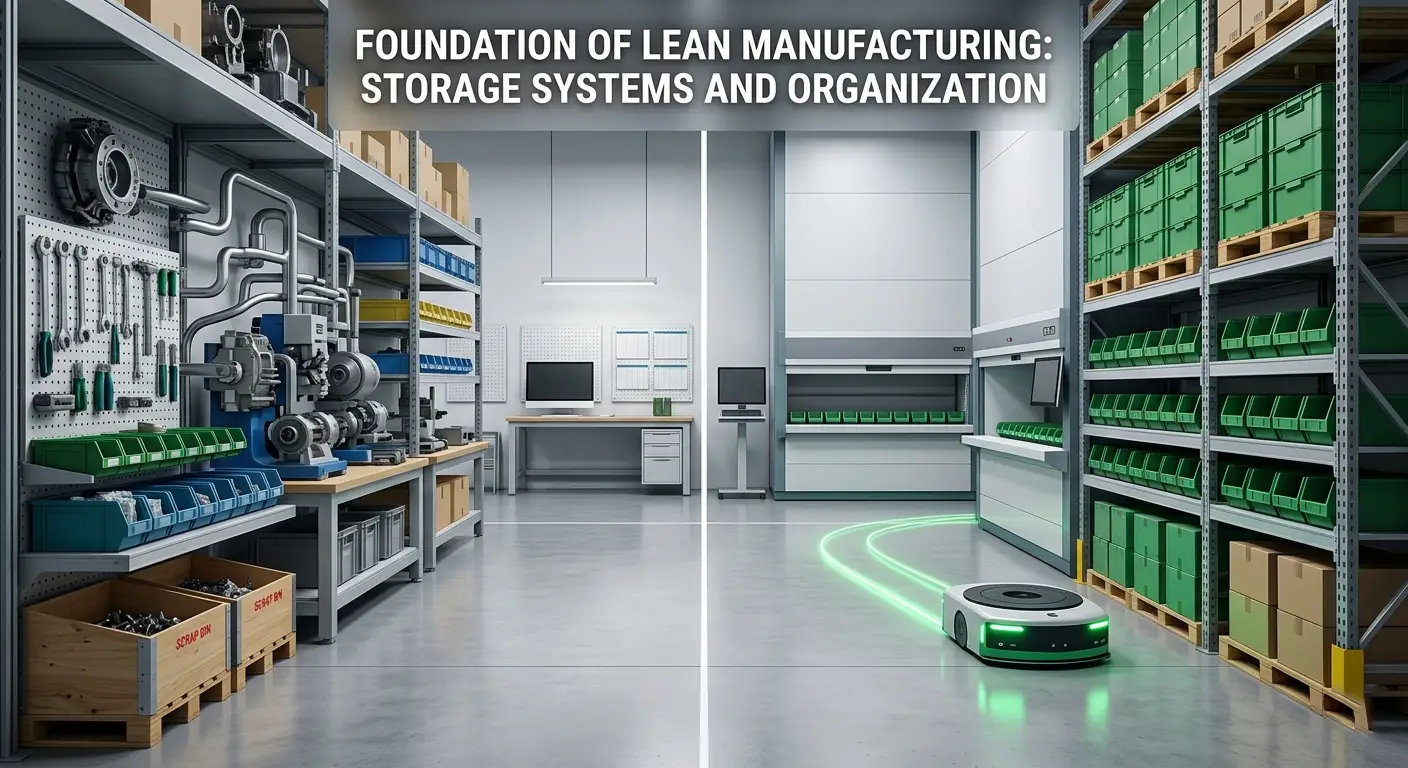
Static Shelving Systems
These are traditional shelving units used for storing goods. While simple, they can become inefficient if not properly organized.
Mobile Storage Units
Mobile systems allow storage units to be moved easily, helping optimize space and improve flexibility.
Automated Storage and Retrieval Systems
These advanced systems use robotics and software to store and retrieve items automatically, reducing human error and increasing speed.
Flow Racks and Gravity Systems
Flow racks use gravity to move items from one end to another, ensuring continuous movement and easy access, making them ideal for lean environments.
FREE PLAN LIBRARY
Looking for a Ready-to-Build Layout?
Planning a FIFO flow rack, gravity rack, picking trolley or modular workstation? Save engineering time with 400+ free pre-engineered layouts designed for manufacturing, warehousing and lean production environments. Download detailed PDF or SketchUp plans.
Storage Systems and Organization: The Foundation of Lean Manufacturing
Why Organization Drives Productivity
An organized workspace reduces confusion and downtime. Workers can quickly locate tools and materials, leading to faster production cycles and fewer errors.
The Role of Standardization
Standardizing storage layouts ensures consistency across operations. This makes training easier and reduces variability in processes.
Integration with Lean Tools (5S, Kanban)
Storage systems integrate seamlessly with lean tools like:
- 5S Methodology (Sort, Set in order, Shine, Standardize, Sustain)
- Kanban Systems for Inventory Control
These tools enhance organization and ensure continuous improvement.
Benefits of Effective Storage Systems
Improved Inventory Management
Accurate storage systems make it easier to track inventory levels, reducing overstocking and stockouts.
Reduced Lead Time
Quick access to materials speeds up production and reduces delays.
Enhanced Workplace Safety
Organized storage minimizes hazards, preventing accidents and injuries.
Introducing Flexpipe Flow Racks
What are Flexpipe Flow Racks?
Flexpipe Flow Racks are modular, gravity-based storage systems designed to optimize material flow in manufacturing environments. They are highly customizable and easy to assemble, making them a perfect fit for lean operations.
Key Features and Advantages
- Modular and scalable design
- Easy installation without specialized tools
- Durable and lightweight materials
- Supports FIFO inventory management
- Enhances workspace organization
Real-World Applications
Flexpipe Flow Racks are widely used in:
- Assembly lines
- Warehousing operations
- Distribution centers
- Manufacturing plants
How Flow Racks Support Lean Manufacturing
First-In, First-Out (FIFO) System
Flow racks naturally support FIFO inventory management, ensuring older stock is used first. This reduces waste and improves inventory turnover.
Space Optimization
By using vertical space and gravity flow, these racks maximize storage capacity without expanding floor space.
Ergonomic Improvements
Workers can access materials at waist level, reducing strain and improving efficiency.
Steps to Implement Efficient Storage Systems
Assess Current Layout
Analyze your existing storage setup to identify inefficiencies.
Identify Bottlenecks
Look for areas where delays or congestion occur.
Choose the Right Storage Solution
Select systems that align with your workflow, like Flexpipe Flow Racks for dynamic environments.
Continuous Improvement
Regularly review and refine your storage systems to maintain efficiency.
Common Challenges and Solutions
Resistance to Change
Employees may resist new systems. Training and clear communication can ease the transition.
Budget Constraints
Start small and scale gradually to manage costs effectively.
Space Limitations
Use vertical storage and modular systems to maximize available space.
Best Practices for Storage Organization
Labeling and Color Coding
Clear labels and color schemes improve visibility and reduce errors.
Routine Audits
Regular checks ensure systems remain organized and efficient.
Employee Training
Well-trained staff is essential for maintaining lean systems.
Future Trends in Storage Systems
Smart Warehousing
IoT-enabled systems provide real-time data on inventory and operations.
AI and Automation
Artificial intelligence is transforming storage with predictive analytics and automation.
Sustainable Storage Solutions
Eco-friendly materials and energy-efficient systems are becoming increasingly important.
Conclusion
Storage Systems and Organization: The Foundation of Lean Manufacturing is more than just a concept; it’s a critical strategy for achieving operational excellence. By investing in efficient storage solutions, businesses can reduce waste, improve productivity, and create safer work environments.
Flexpipe’s Flow Racks stand out as a powerful tool in this journey, offering flexibility, efficiency, and scalability. Whether you’re upgrading your current system or starting from scratch, adopting the right storage solutions can make all the difference.
FAQs
- Why are storage systems important in lean manufacturing?
They reduce waste, improve efficiency, and support smooth workflow.
- What is FIFO in storage systems?
First-In, First-Out ensures older inventory is used before newer stock.
- How do flow racks improve efficiency?
They use gravity to move items, reducing manual handling and saving time.
- Are Flexpipe Flow Racks customizable?
Yes, they are modular and can be tailored to specific needs.
- What industries benefit from lean storage systems?
Manufacturing, warehousing, logistics, and distribution industries.
- How can you start implementing lean storage?
Begin with a layout assessment and gradually introduce optimized systems like flow racks.
Recent Articles