Lean: Manufacturing, Management, Principle, Waste, Methodology and More

What is Lean?
Lean is a systematic approach to identifying and eliminating waste through continuous improvement. Rooted in respect for people and operational excellence, Lean aims to maximize customer value while minimizing waste.
Origins of Lean Thinking
The roots of Lean trace back to the Toyota Production System (TPS) developed in post-WWII Japan. Engineers like Taiichi Ohno and Shigeo Shingo pioneered principles like Just-in-Time and Jidoka to create a culture of efficiency and quality.
Lean vs. Traditional Manufacturing
Unlike traditional mass production, which emphasizes volume, Lean emphasizes value creation with minimal waste. Traditional models focus on output; Lean focuses on outcomes and customer satisfaction.
Core Principles of Lean
Lean is guided by five core principles:
-
Value
Everything starts with understanding what the customer values. Businesses must define value from the customer’s point of view.
-
Value Stream
Map out all steps that take a product from concept to customer. Remove non-value-adding steps.
-
Flow
Ensure smooth, uninterrupted production flow. Bottlenecks and delays are eliminated.
-
Pull
Products are made based on actual demand, not forecasts. This prevents overproduction.
-
Perfection
Continuous improvement (Kaizen) is the goal. Even small enhancements matter.
Lean Manufacturing
Lean Manufacturing is the application of Lean principles in a production environment.
Definition & Goals
Lean Manufacturing strives to create more value with fewer resources. Goals include lower costs, improved quality, and faster lead times.
Common Tools Used in Lean Manufacturing
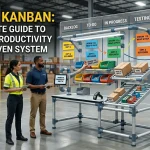
- Kanban: Visual workflow management
- 5S: Workplace organization
- Kaizen: Continuous improvement
- Poka-Yoke: Error-proofing techniques
Case Study: Lean in the Automotive Industry
Toyota’s production system transformed the automotive industry. By minimizing waste and promoting quality, Toyota gained a competitive edge worldwide.
Lean Management in Practice
Lean isn’t just for factories. It applies to all areas of business.
Key Lean Management Strategies
- Daily huddles
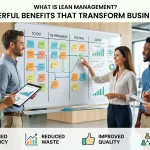
- Visual management boards
- Standard work protocols
- Cross-functional collaboration
Lean in Office and Administrative Settings
In admin processes, Lean can streamline billing, onboarding, and reporting. It reduces paperwork, duplicate tasks, and long wait times.
The 8 Wastes in Lean (Muda)
Eliminating waste is central to Lean.
- Overproduction
- Inventory
- Motion
- Waiting
- Overprocessing
- Transportation
- Defects
- Unused Talent
Understanding these helps businesses find and remove inefficiencies.
Lean Methodology and Its Application
-
Lean Methodology and Its Application
Lean focuses on maximizing value by eliminating waste and improving workflows across all business processes.
-
Just-in-Time (JIT)
Products are made only when needed, reducing inventory and cost.
-
5S System
Sort, Set in order, Shine, Standardize, Sustain – a clean and organized workspace supports efficiency.
-
Kaizen
Small, continuous changes add up over time to create major improvements.
-
Poka-Yoke
Mistake-proofing designs eliminates human errors.
-
Kanban
Visual boards that signal demand, helping teams manage workflows effectively.
Lean Processing Techniques
-
Value Stream Mapping
Visualizing every step in a process helps identify waste.
-
Takt Time
The rate at which products must be produced to meet demand.
-
Standardized Work
Consistent procedures that lead to predictability and high quality.
Benefits of Lean for Businesses
- Efficiency: Streamlined processes reduce effort and time.
- Cost Reduction: Less waste equals lower expenses.
- Customer Satisfaction: Faster delivery and better quality.
Challenges in Lean Implementation
-
Cultural Resistance
Shifting company mindset takes time and effort.
-
Training & Mindset Shift
Employees need to be educated and engaged.
-
Sustaining Lean Initiatives
Ongoing leadership support is crucial to avoid backsliding.
Industry Applications of Lean
Lean is applicable beyond manufacturing.
- Healthcare: Improved patient flow and reduced wait times
- Construction: Better scheduling and resource use
- Service: Streamlined customer service
- Education: Efficient administration and resource allocation
Introducing Flexpipe’s Lean Manufacturing Solutions
Flexpipe is a leader in modular material handling systems that align with Lean principles. We offer pipe and joint systems for custom structures like workstations, carts, and flow racks.
Modular Material Handling System
Flexpipe’s system is adaptable, easy to install, and helps manufacturers build Lean structures quickly and affordably.
Benefits of Using Flexpipe
- Customization for any application
- Reduced implementation time
- Promotes 5S and visual management
- Durable and scalable
Real-world Flexpipe Applications
Used in industries from aerospace to electronics, Flexpipe systems enhance Lean transformations by supporting ergonomic, organized, and efficient environments.
How to Start Your Lean Journey
-
Conducting a Lean Audit
Identify current process states and waste.
-
Creating a Lean Roadmap
Outline short- and long-term goals for Lean implementation.
-
Training & Employee Involvement
Engaged and educated teams drive lasting change.
Tools and Resources for Lean Implementation
- Books: The Lean Startup, Lean Thinking
- Courses: Coursera, Udemy, Lean programs
- Software: LeanKit, Trello, Minitab
Sustainability and Lean
Lean supports environmental goals through reduced waste and resource optimization.
- Lean and Green Practices: Energy-efficient processes, less raw material use, lower emissions.
Conclusion
Lean isn’t just a buzzword; it’s a philosophy that transforms organizations. From manufacturing lines to hospital hallways, Lean creates a culture of efficiency, quality, and respect. And with partners like Flexpipe, your Lean journey becomes more achievable than ever.
FAQs
- 1. What companies use Lean?
Toyota, Nike, Intel, and Amazon are known Lean adopters. - 2. Is Lean only for manufacturing?
No, it applies to services, healthcare, education, and more. - 3. Can small businesses implement Lean?
Yes, Lean principles scale well for businesses of any size. - 4. What are the limitations of Lean?
Requires cultural change, continuous effort, and leadership support. - 5. How long does Lean transformation take?
It varies but typically spans 6 months to several years. - 6. How does Flexpipe align with Lean principles?
Flexpipe supports Lean by enabling fast, cost-effective, and customizable material handling solutions.
Recent Articles