Powerful Warehouse Organization Ideas That Transform Efficiency
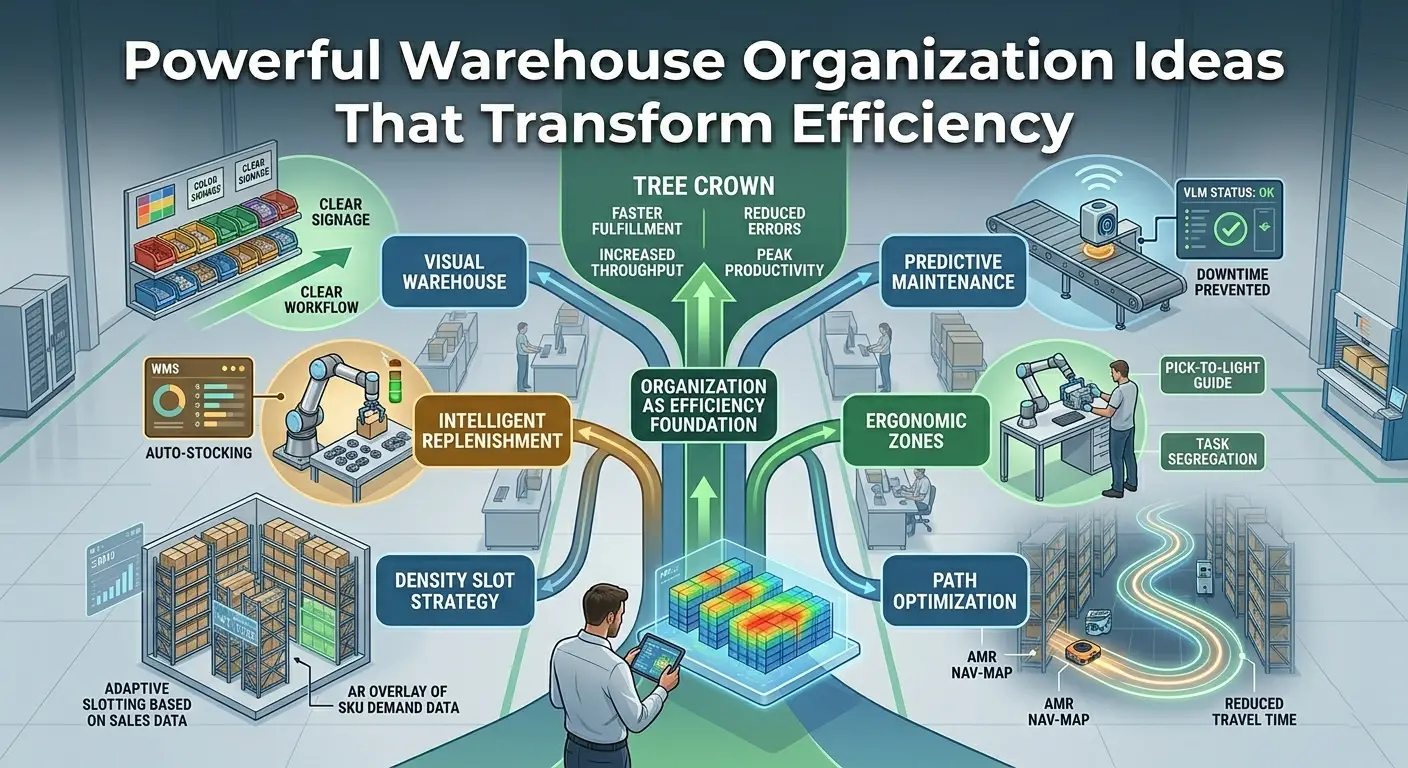
In today’s fast-paced supply chain world, efficient warehouses are no longer optional, they’re essential. Smart Warehouse Organization Ideas help businesses reduce waste, improve picking speed, enhance safety, and adapt quickly to change. Whether you manage a small distribution center or a large fulfillment hub, how your warehouse is organized directly impacts productivity and profits.
One of the biggest challenges warehouses face is rigidity. Fixed racking, welded workstations, and permanent layouts often slow growth and increase costs. That’s why modern warehouses are turning to modular solutions like Flexpipe Modular System, which allows teams to design, build, and reconfigure storage and workstations without tools or welding.
Let’s explore practical, proven warehouse organization ideas, and how modular systems can bring them to life.
Core Principles Behind Effective Warehouse Organization
Optimize for Flow, Not Just Storage
A well-organized warehouse prioritizes movement. Materials should flow smoothly from receiving to storage, picking, packing, and shipping. Poor layouts cause bottlenecks, wasted steps, and employee fatigue.
Design for Scalability and Change
Business needs evolve. Seasonal demand, new SKUs, or process improvements require layouts that can adapt. Modular systems excel here, allowing fast reconfiguration without downtime.
Balance Efficiency, Safety, and Visibility
Organization isn’t just about speed. Clear aisles, ergonomic workstations, and visual management improve safety and reduce errors.
17 Practical Warehouse Organization Ideas That Work
1. Use Vertical Space Strategically
Maximize ceiling height with shelving, racks, and gravity-fed flow lanes. Modular structures from Flexpipe make it easy to build vertical storage without permanent construction.
2. Implement Zone-Based Layouts
Divide your warehouse into zones (receiving, bulk storage, picking, packing). Clear boundaries reduce confusion and speed up workflows.
3. Create Modular Workstations
Fixed workbenches limit flexibility. Flexpipe’s Modular System lets you build ergonomic workstations that can be adjusted or expanded as tasks change.
4. Apply the 5S Method
Sort, Set in order, Shine, Standardize, and Sustain. Modular racks and carts make it easier to maintain consistent organization.
5. Improve Picking with Flow Racks
Gravity flow racks support FIFO inventory and faster picking. Flexpipe integrates flow lanes into modular frames for lean operations.
6. Use Mobile Carts Instead of Fixed Storage
Mobile carts reduce travel time and support dynamic workflows. Modular carts can be customized for bins, totes, or tools.
7. Standardize Storage Locations
Label shelves, bins, and lanes clearly. Consistency improves accuracy and reduces training time for new employees.
8. Build Custom Racks for Irregular Items
Not all products fit standard pallets. Flexpipe allows custom rack designs for long, bulky, or awkward materials.
9. Reduce Aisle Congestion
Right-size aisles based on equipment used. Modular storage lets you reclaim wasted space without compromising safety.
10. Integrate Visual Management
Color-coded lanes, labeled frames, and visual cues improve communication and error prevention.
11. Improve Ergonomics at Packing Stations
Adjustable-height modular stations reduce strain and improve productivity.
12. Create Dedicated Returns Areas
Returns can disrupt workflows. Modular zones keep reverse logistics organized and contained.
13. Design for FIFO Inventory Control
FIFO improves product quality and reduces waste. Modular flow racks make FIFO easy to implement.
14. Use Cross-Docking Areas
For fast-moving goods, cross-docking minimizes storage time and speeds fulfillment.
15. Organize Tools and Supplies at Point of Use
Shadow boards and modular tool holders reduce walking and searching time.
16. Prepare for Automation Compatibility
Flexible layouts work better with conveyors, robots, and AMRs.
17. Continuously Improve with Modular Flexibility
The best organization is never final. Modular systems support continuous improvement without major capital investment.
Why Flexpipe’s Modular System is Ideal for Warehouse Organization
Flexpipe’s Modular System is designed specifically for lean manufacturing and warehouse environments. Unlike welded steel or fixed racking, Flexpipe uses coated steel pipes and connectors that assemble quickly and reconfigure easily.
Key Benefits of Flexpipe for Warehouse Organization
- Tool-free assembly – No welding or cutting required
- Scalable designs – Expand or modify anytime
- Cost-effective – Reuse components instead of buying new fixtures
- Ergonomic – Adjustable for different users and tasks
- Lean-focused – Perfect for Kaizen and continuous improvement
Warehouses using Flexpipe gain long-term flexibility while maintaining strength and durability.
Common Warehouse Organization Mistakes to Avoid
- Overbuilding fixed infrastructure
- Ignoring employee ergonomics
- Failing to plan for growth
- Poor labeling and visual management
- Treating organization as a one-time project
Modular systems help avoid these mistakes by making change simple and affordable.
Final Thoughts
Effective Warehouse Organization Ideas focus on adaptability, efficiency, and people. As warehouses face constant change, rigid layouts become liabilities. Flexpipe’s Modular System empowers teams to design smarter spaces that evolve with demand, without sacrificing strength or safety.
By combining proven organization strategies with modular flexibility, warehouses can stay competitive, lean, and future-ready.
FAQs
- What are the most effective Warehouse Organization Ideas?
The best ideas focus on flow, flexibility, and visibility, including modular racks, zone layouts, and mobile carts.
- How does modular storage improve warehouse efficiency?
Modular storage adapts quickly to process changes, reduces downtime, and supports continuous improvement.
- Is Flexpipe strong enough for warehouse use?
Yes. Flexpipe’s steel pipes are designed for industrial loads and are widely used in warehouses worldwide.
- Can modular systems replace traditional racking?
In many cases, yes, especially for picking areas, workstations, flow racks, and custom storage.
- Are modular systems expensive?
They often cost less over time because components are reusable and eliminate welding or reconstruction costs.
- How fast can a warehouse implement Flexpipe solutions?
Many Flexpipe structures can be built or modified in hours, not weeks.
Recent Articles