Welded vs. Modular Workstations
Modern manufacturing and industrial environments demand efficiency, flexibility, and scalability. One of the most important layout decisions organizations face today is choosing between welded vs. modular workstations. While welded structures were once the industry standard, modular systems, especially solutions like Flexpipe’s modular workstation system, are redefining how workspaces are designed, built, and improved.
This post explores the differences between welded and modular workstations, highlights their strengths and weaknesses, and explains why modular systems are becoming the preferred choice for lean, future-ready operations.
Understanding Industrial Workstations
What is a Welded Workstation?
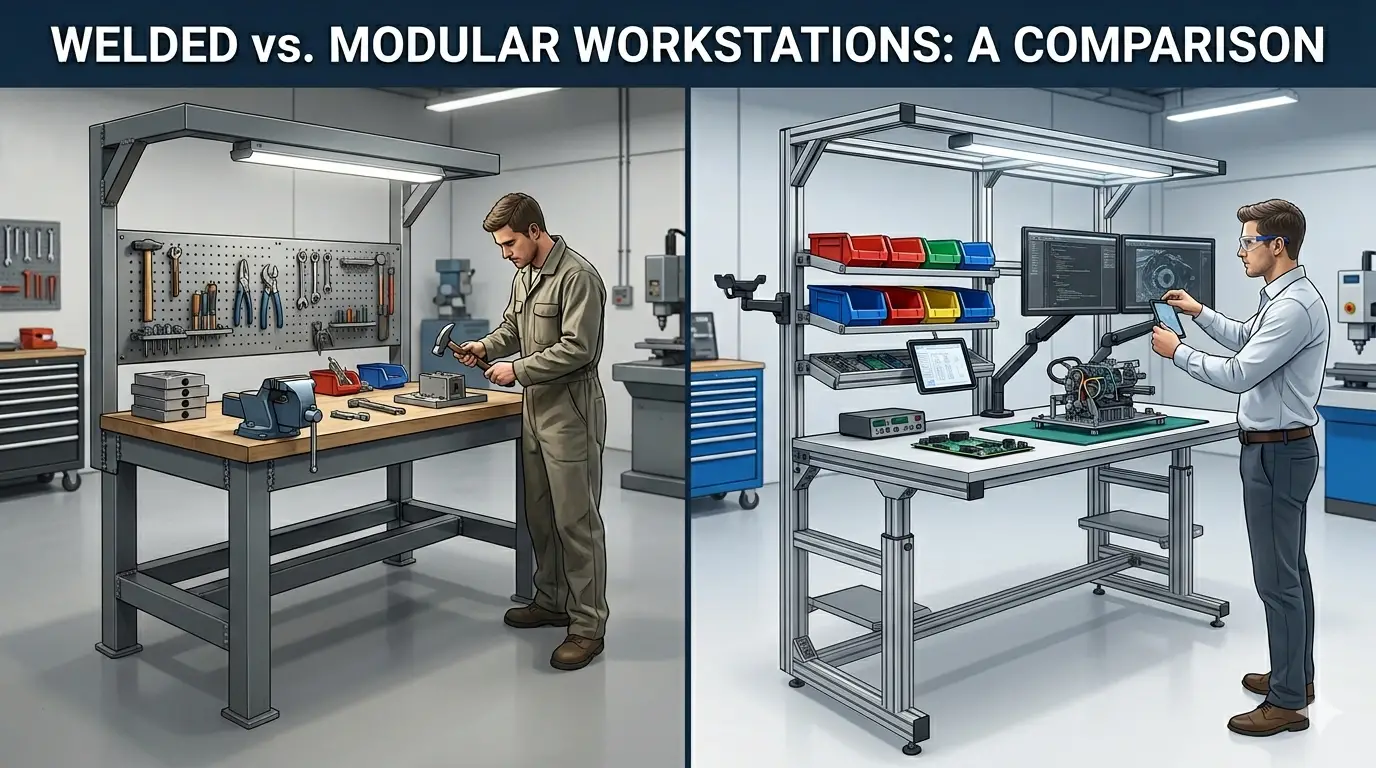
A welded workstation is a permanent structure fabricated by welding steel or metal components together. These stations are typically custom-built and designed for a specific task or layout.
Common characteristics include:
- Fixed dimensions and design
- High initial strength
- Minimal adaptability once installed
While welded workstations can be durable, they often lack flexibility in fast-changing production environments.
What is a Modular Workstation?
A modular workstation is built using standardized components, such as pipes, connectors, and accessories, that bolt together rather than being welded. Flexpipe’s modular system is a leading example, offering a lightweight yet industrial-grade solution.
Key features include:
- Bolt-together assembly
- Easy reconfiguration
- Expandable and reusable components
Welded vs. Modular Workstations: Key Differences
| Feature | Welded Workstations | Modular Workstations (Flexpipe) |
| Flexibility | Very limited | Highly flexible |
| Installation Time | Long | Fast |
| Modification | Costly or impossible | Simple and affordable |
| Scalability | Poor | Excellent |
| Maintenance | Requires skilled labor | Tool-based adjustments |
| Reusability | None | 100% reusable |
Cost Comparison: Short-Term vs. Long-Term Value
Upfront Costs
Welded workstations often appear cheaper at first, especially if fabricated in-house. However, hidden costs, engineering time, welding labor, and downtime, add up quickly.
Modular systems like Flexpipe may have a slightly higher material cost upfront, but installation requires less labor and no specialized welding skills.
Long-Term ROI
Over time, modular systems deliver superior ROI because:
- Components can be reused across projects
- Layout changes don’t require scrapping equipment
- Continuous improvement initiatives cost less
Flexibility and Continuous Improvement
Why Flexibility Matters
In lean manufacturing, layouts change frequently to improve flow, ergonomics, and productivity. Welded workstations resist change, while modular systems embrace it.
Flexpipe’s modular system allows teams to:
- Adjust heights for ergonomics
- Add shelves, rollers, or tool holders
- Reconfigure entire cells in hours, not weeks
This adaptability makes a major difference in dynamic environments.
Ergonomics and Worker Safety
Challenges with Welded Structures
Once welded, ergonomic improvements often require cutting, grinding, and rewelding. This discourages continuous ergonomic optimization.
Modular Workstations Improve Ergonomics
Flexpipe’s system supports:
- Height-adjustable workstations
- Sit-stand configurations
- Custom tool positioning
Improved ergonomics reduce fatigue, injuries, and turnover.
Installation Speed and Downtime
Welded Workstations
- Require fabrication time
- Often installed during shutdowns
- Modifications disrupt production
Flexpipe Modular Systems
- Assembled on-site quickly
- Installed with minimal disruption
- Adjusted while production continues
This speed directly supports agile manufacturing goals.
Sustainability and Waste Reduction
The Problem with Welded Workstations
When a welded workstation becomes obsolete, it is often scrapped, wasting materials and money.
Flexpipe’s Sustainable Advantage
Flexpipe components are:
- Reusable
- Reconfigurable
- Designed for long life cycles
This aligns with modern sustainability and ESG initiatives.
Customization Without Complexity
Flexpipe’s modular system offers customization without engineering bottlenecks. Using standardized components, teams can design:
- Assembly stations
- Packing tables
- Flow racks
- Test benches
Final Verdict
When comparing Welded vs. Modular Workstations, the advantages of modular systems are clear. While welded workstations may still have niche applications, they struggle to meet the demands of modern, flexible production environments.
Flexpipe’s modular system stands out by offering:
- Speed
- Flexibility
- Ergonomic design
- Long-term cost savings
For organizations focused on continuous improvement and operational agility, modular workstations are no longer an alternative, they are the standard.
FAQs
- Which is better: welded or modular workstations?
For most modern facilities, modular workstations provide better flexibility, ROI, and scalability.
- Are modular workstations strong enough for industrial use?
Yes. Flexpipe’s modular system is designed for industrial environments and supports heavy loads.
- Can modular systems replace welded structures completely?
In many cases, yes, especially for assembly, packaging, and material handling stations.
- How long does it take to install a modular workstation?
Most Flexpipe workstations can be assembled in hours instead of days.
- Are modular workstations easy to modify?
Absolutely. Modifications require basic tools and minimal downtime.
- Is Flexpipe suitable for lean manufacturing?
Yes. Flexpipe is widely used in lean and continuous improvement environments.
Recent Articles